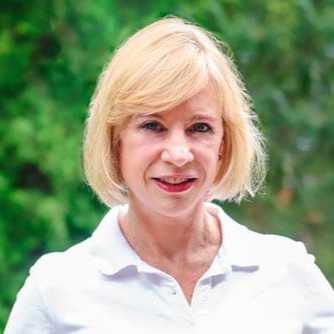
Linda Raschke
Linda Raschke is a veteran short-term trader, author, and former hedge fund manager known for combining pattern recognition with strict money management. She began as an equity options market maker on the Pacific Coast Stock Exchange in 1981, later traded on the Philadelphia Stock Exchange, became a Commodity Trading Advisor in 1992, and founded LBR Group. Her Granat Fund was ranked 17th of roughly 4,500 hedge funds for five-year performance by BarclayHedge, and she managed money until retiring from the business in 2015. A past president of the American Association of Professional Technical Analysts, she has taught trading in more than 20 countries and received IFTA's Lifetime Achievement Award in 2024. She co-authored Street Smarts with Larry Connors, wrote Trading Sardines, and was profiled in Jack Schwager's The New Market Wizards. Her approach centers on short-term swing and day trading, time-of-day expectancy, ATR-based exits, and dollars per time unit.
Trading Framework
Linda Raschke trades probability, not prediction: a one- or two-bar edge measured in ATR units, entries chosen for dollars per unit of time, exits run from an actuarial table, and even position size in units, so the account balance never enters the decision.
Probability, not prediction
The edge is short-horizon: past price gives a positive expectation over one or two bars, and certainty decays as the horizon lengthens because every added day adds variables to an open system. Indicators cannot improve that — they are derivatives of price that restate the bar chart — and order flow adds nothing, because it duplicates the chart and is distorted by time-of-day volume. One watch, not two. She measures volatility in ATR, reads price structure around logical swing highs and lows, and trades the market's reaction rather than the information.
Dollars per time unit
Selection is a rate question: get in where the market pays the most dollars in the least time. Her profit centers are short-term scalping — one to three trades a day, taking one or two of the 60-to-90-minute index swings — one-day-in, one-day-out volatility breakouts, the weekly–daily pullback, and seasonal trades, rotated so their good quarters do not coincide. Breakouts have their best expectancy off the session open, where the opening bulge fades within 25 minutes, then a noon counter-trend reaction, then the afternoon trend. Turtle Soup fades a failed 20-day-high breakout, the reversal of the classic trend entry, and every signal is modeled for frequency, delay, and decay. Breakout configurations are classified — range, channel, ABC — and an intraday volume spike is usually an algo piercing a prior swing high.
Exits are an actuarial table
Initial trade location sets the risk; money management is where the money is made. At entry she models the excursion on either side of price: how much room the trade gets, and the point beyond which a good trade cannot go. Exits are an actuarial table of ATR targets, trailing stops, and time stops. Trailing is optimal only about 15% of the time; most trades play for a small or large target, or scale out in pieces with a runner. Size is even: every market normalized to its average dollar range, six corn contracts to one crude, so $100,000 of capital buys one unit, recomputed quarterly. Even a 90% win rate produces six losers in a row, and a portfolio-level 10% drawdown closes everything, because correlations break when you need them.
Process, not the scoreboard
Daily equity is a distraction: a strong month once left her five months without a new high, so she stopped looking at balances, delegated the scorekeeping, and thinks in units. The routine is a half-hour game plan the night before, an hour of nightly logging, and one pattern at a time, six months each. Models are tested in three-year blocks across bull, bear, and dead markets, and nothing is trusted on fewer than 300 trades. She has never made a trade off intuition, though flow is pattern recognition running without words. An early account was wiped out selling naked straddles into a takeover and took five years to repay; the game is negative-sum, so the process has to be the reason to play.
Books

Jack Schwager's 1992 follow-up to Market Wizards includes Raschke's chapter, 'The Music of the Markets,' alongside interviews with the era's top traders. It captures her short-term, pattern-based approach and the risk discipline she carried from the Pacific Coast Stock Exchange options floor into professional money management.
Videos

Bites
Why the world's best funds hold for under 24 hours
▶ 2m 55sLinda points to Renaissance's Medallion and Monroe Trout as funds that hold positions for less than a day, arguing their edge is infrastructure and scale. Trend following requires enough capital to spread across many markets and the tolerance for 40% drawdowns — a poor fit for most individuals.
"Almost every trend follower out there and the systems themselves have had 40% drawdowns at one period. And I don't think your average individual would want to sit through that."
Predicting is an evil word
▶ 1m 41sAsked whether past price predicts future price, Linda says a one- or two-bar edge exists but certainty decays as the horizon lengthens. Every added day introduces variables into an open system, so she trades probability rather than prediction.
"There is a positive expectation. If I am just predicting one or two bars, I can get a positive expectation. ... But predicting is an evil word."
You can't read big money — and that's the retail advantage
▶ 2m 57sLinda explains why volume cannot reveal institutional intent: a fund like Fidelity may need two weeks just to cut a large position in half. The retail trader's edge is the opposite — liquidity and the freedom to enter and exit in seconds.
"If you have Fidelity, a mutual fund... it can take them two weeks just to get that position reduced by 50%. They don't have the flexibility to go in and out like a retail trader might."
Two watches: eliminate redundancies, indicators are derivatives
▶ 3m 1sLinda dismisses order flow as the latest fad and argues oscillators are derivatives of price that cannot produce a testable edge. Her rule is to strip the toolset down to essentials — "if you have two watches, you'll never know what time it is" — and measure volatility with ATR instead.
"If you have two watches, you'll never know what time it is. If you have one watch, you'll always know what time it is."
Order flow mirrors the bar chart and is distorted by the clock
▶ 1m 58sLinda says order flow merely restates what the bar chart already shows and is distorted by time-of-day volume patterns. She prefers higher-timeframe structure around logical swing highs and lows.
"The other problem with order flow is it's so dependent on time of day functions. So, you're always going to have a surge in volume off the opening."
Time of day, day of week, and seasonality shape expectancy
▶ 1m 57sBreakouts and range expansions work best off the session open, Linda says, while Mondays run lighter and certain months and quarter-ends carry heavier volume. Volume alone can cancel out — what matters is the imbalance, not the raw total.
"Monday tends to be much lighter volume than Tuesday and Wednesday... There's seasonality to volume. Certain months have much heavier volume."
The volume-spike test: 80% at prior swing highs and lows
▶ 2m 14sLinda offers a simple experiment: mark an intraday volume spike and drop to a one-minute chart. Eighty percent of the time it sits at a prior swing high or low, evidence that algos trigger off channel breaks.
"80% of the time it's going to be on a previous little intraday swing high or swing low... That tells you that the algos are at work because there are a lot of algos out there that trigger off of a channel high or a channel low getting penetrated."
Can retail survive? Get the main idea right
▶ 5m 37sLinda says retail traders survive by being opportunistic — waiting until one side is pulled offside — rather than copying institutions. Eliminating your biggest loser each year would make you several times more profitable, and getting the main idea right is most of the game.
"If you eliminated your biggest loser year after year, I bet you'd be three times more profitable... The idea of this game is get the main idea right."
Initial trade location, money management, and the outliers
▶ 2m 32sLinda stresses initial trade location and money management over entry tricks. The real money, she says, is in understanding outliers and aberrations — the changes in historical relationships that everyday chart reading misses.
"Your game's going to be worthless if you don't have money management algorithms. And that's really where, in my opinion, the real money is made. And the real money is made in understanding the outliers and understanding the aberrations."
Dollars per time unit and the actuarial table
▶ 2m 14sLinda explains the phrase she learned from a mentor: get in where the market can pay the most dollars in the least time. She frames exits as an actuarial table built from ATR targets, trailing stops, and time stops.
"The name of the game for him was about dollars per time unit... We want to get into the market where we can make the most dollars in the least amount of time."
ATR units, springs and traps, and the stop that keeps you in
▶ 3m 10sThe host challenges whether trailing stops are only for abnormal outcomes. Linda explains ATR units, springs and traps, and Welles Wilder's volatility stop — and why the best trades keep you in regardless of technique.
"On the best trades, it doesn't matter what technique you're using. They're all going to keep you in."
Trailing is optimal only 15% of the time; scale out instead
▶ 3m 31sLinda says most of the time you should play for a small or large target, or scale out, rather than use a trailing stop. She cites Perry Kaufman's math for scaling out in pieces and warns against trying to trail everything.
"I said only 15% of the time is it optimal to trail. Everybody would like to trail a stop and think they're going to capture stuff all the time. No."
S&P day trading: the opening bulge, noon reversal, 2pm return
▶ 3m 29sLinda traces how her profit centers began with S&P day trading: the crowd pays up off the open, a counter-trend reaction appears near noon as specialists rebuild inventory, and the afternoon brings the return.
"That opening bulge where everybody wants to chase and all of a sudden the move's over after the first 25 minutes... just before 12 noon, that's when the specialists would go to lunch. You get your counter trend reaction."
The profit centers and their quarterly rotation
▶ 2m 36sLinda lays out her profit centers — short-term scalping, one-day-in/one-day-out volatility breakouts, the weekly/daily pullback setup, and opportunistic seasonal trades — and explains how their quarterly rotation diversified her P&L.
"Profit center one was the short-term scalping. For me, that was one to three trades a day. ... If you look at a chart of the S&Ps, there's probably on balance two to three swings that last 60 to 90 minutes. You just want to capture one or two of those."
Even bet size, trading in units, and delegating execution
▶ 4m 7sLinda keeps every bet the same size and thinks in units rather than dollars, having an assistant execute so she never touches the order ticket. The game is played on the board, not in the account balance.
"I'm never thinking about the numbers. I'm never thinking about the dollars. It's just like this is the spot on the game board. Put on a unit. This is the spot to take it off."
Standardized risk, drawdown cuts, and six losers in a row
▶ 3m 8sLinda contrasts standardized risk with dynamic sizing: discretionary traders must cut size during a drawdown, but systematic traders should not, because the drawdown may precede the next big win. Even a 90% win rate produces six losers in a row, so sizing must allow for the streak.
"Everybody's going to have six losers in a row. That's a given. Even with a 90% win rate, you will have six losers in a row."
Stress depends on your wealth profile; take days off
▶ 1m 38sLinda says a 20% drawdown means something different to someone with $20 million than to someone living off the account. When stress builds, take a day or two off before it produces unconscious mistakes.
"Everybody's different and everybody has a different wealth profile... It's not going to stress them to have a 20% draw down."
Routines: a half-hour game plan and nine years not knowing net worth
▶ 3m 12sLinda describes her routines — a half-hour game plan the night before, no meditation — and recalls nine years of not knowing her own net worth because she loved playing the game. She eliminated distractions to keep the process simple.
"I went for like nine years not knowing my own net worth... I just liked playing the game."
Thick skin and "I've never made a trade off of intuition"
▶ 4m 39sLinda talks about temperament and resilience, saying life experience builds the thick skin trading requires. She is emphatic that she has never made a trade off intuition — the signal has to be a quantifiable pattern or condition.
"Life's experience builds you up a very thick skin."
Flow state is pattern recognition, not magic
▶ 4m 48sLinda describes flow as losing verbal processing: when she trades best she is not thinking, just recognizing a test-and-reject she has seen thousands of times. What feels like intuition is pattern recognition not yet put to paper.
"When I do my best trading I am not thinking... I've seen this so many times. I'm not verbally processing it."
Flow in drawdowns and paper-trading a breakout system
▶ 2m 35sFlow is available in drawdowns too, Linda says, because it is about playing the game rather than winning the last hand. She suggests paper-trading a simple volatility breakout system across five markets to build process over outcome.
"Do that on paper with five different markets. Each market should give about two trades per week. And just write it down. Write it down."
Modeling excursion and the three breakout configurations
▶ 4m 41sLinda says you should know at entry how much room to give the trade and what failure looks like. She models the excursion on either side of entry and classifies breakouts by configuration: range or consolidation, channel, or ABC pattern.
"How much is it going to go on either side of your entry price?... You can come up with a statistical measurement of it should not go beyond this point if it's going to be a good trade."
Shutting the fund, writing Trading Sardines, building with AI
▶ 2m 15sAfter closing her fund, Linda found that auditors, attorneys, IT, and $7,000-a-month data feeds outweighed the fun of trading. She wrote Trading Sardines and now spends her days building AI tools.
"My data feeds were like $7,000 a month. And I'm like, this is not fun anymore. You know, I'm not doing what I enjoy doing. So, that's when I sort of packed it in."
AI's two uses: streamline the process or train the model
▶ 2mLinda sees two distinct uses for AI in trading: streamlining process and coding, and model training. General LLMs cannot do the second — you must train on patterns and string components together.
"AI can be used in two distinct purposes for the markets. The first is it's wonderful... for streamlining your process."
Is this time different? Gradual change and democratized tools
▶ 2m 9sAsked whether markets have fundamentally changed, Linda says change is gradual and the tools have democratized. A retail trader can now replicate much of what Renaissance does for $500 a month instead of $50 million.
"You can do exactly what Renaissance Medallion Fund does in terms of constantly coming up with new strategies... You can do it for $500 a month."
Longevity: stay healthy and keep the game fun
▶ 3m 3sLinda's longevity advice is to stay healthy — the body gives you energy — and to keep the game fun. She points to Buffett and other traders still at it decades on because they love it.
"Stay healthy. It's not just a healthy body because that's what gives us energy."
It's all 100% bottom line business
▶ 2m 18sLinda pushes back on being introduced as one of the best female traders, saying the market is indifferent to gender, race, and background — it is a 100% bottom-line business. Asked what separates her, she names single-minded focus first, tracing it to years of practicing piano six hours at a time. She warns that every pull from social media, TV, or noise reduces the odds of long-term success.
"It doesn't care about your gender or your race or where you come from... It's all 100% bottom line business."
Adversity builds the confidence to trade
▶ 3m 20sLinda describes a decade of adversity from roughly age 14 to 24 and argues that overcoming it early builds the character to withstand later stress. That experience becomes self-confidence, which she says is eroded every time a trader lets someone else's opinion stand in for their own judgment. She estimates it takes at least ten years to find a durable edge.
"Every time you do that, your subconscious is saying, 'I don't truly trust myself or have the belief in myself to find my own way.'"
Social media is engineered to juice dopamine
▶ 4m 32sLinda distinguishes social interaction from the work of trading and recommends drawing a boundary between them. She cites trading coach Steve Ward's overlapping-circles model: during the session, do your own work or talk with trusted peers about anything except trade ideas. Platforms are designed to trigger dopamine, she says, so the trader has to recognize the addiction and find other outlets.
"You are a puppet that's being manipulated to juice that dopamine."
The last trait you need is adaptability
▶ 3m 48sLinda says trading is not in her DNA and that she no longer trades full-time or with the leverage she once used, but she almost always has a position on. She posts charts to show the power of pure technicals: no news, no order flow, just price patterns readers can study for themselves. Her final trait for durable success is adaptability, because the games that work — like the momentum playbook of the current bull market — eventually disappear.
"There's your last trait for being successful: you must have the ability to adapt."
Superstar traders recognize what won't revert
▶ 5m 59sLinda argues that humans still beat algorithms at processing relationships between markets, prices, and data points. People instinctively arb any relationship that stretches beyond its normal range, but the real edge is recognizing when an outlier will keep going instead of reverting. Experience lets a trader see an unusual move unfolding faster than an algorithm trained on past data.
"Your ability to recognize when something is not going to revert back to the mean but continue on in that direction is really where the superstar traders are made."
Relationship intelligence is a different kind of intelligence
▶ 1m 55sLinda says understanding relationships does not require a college education or a high SAT score, which she notes proprietary firms often screen for. Spatial reasoning — seeing which piece completes a pattern — is another form of intelligence that matters in markets. She ties both to a trader's ability to read price action relative to their own entry rather than forcing everything into a quantitative framework.
"Understanding the importance of relationships — that's something you don't have to have a college education for. It's a different type of intelligence."
Intuition is compounded experience
▶ 4m 58sLinda defines intuition as the compounding of decades of chart experience, not a mystical gut feeling. She sets up 20 markets each night from a homework sheet and trades only the three to five that qualify, hunting fat tails rather than small profit targets. She illustrates it with a coffee trade: she flattened it when it looked like another false breakout, re-entered the next day without a chart, and caught her biggest winner of the day.
"Intuition technically is a compounding of all your experience."
Confidence is built through action
▶ 1m 50sAsked whether confidence comes from seeing the same patterns repeat, Linda says action produces confidence: the first attempts are hard to trust, but repeated results validate the read. She also believes some baseline self-belief must already exist, often from childhood or sport. By now her execution is automatic — she deliberately avoids narrating the trade in words because verbalizing it would tangle her up and stop her pulling the trigger.
"When I do stuff now, I don't even think about it... If I had to describe to myself what I was doing ahead of time, I would just get so tangled up in all the words I would never pull the trigger."
The $89,000 blowup at 22
▶ 4m 19sLinda recalls blowing out at 22 by selling straddles on a takeover stock, a loss she memorialized in a chapter called "Oops." She did not want to file bankruptcy, so she spent the next five years as an indentured servant to the clearing firm, paying back every cent while everybody else negotiated their deals. The experience kept her in the game but made those years miserable.
"I didn't want to file bankruptcy, which would have been my only option at age 22... I'm probably the only fool out there that paid back 100 cents on the dollar."
The only goal she ever wrote down
▶ 2m 8sLinda says she never thought about reaching the heights her career would reach; she stays day-to-day and is superstitious about looking too far ahead. During a two-year illness early on, she listened to Tony Robbins cassette tapes and wrote down one goal — a dollar amount within three years. She hit it in half the time.
"I wrote down I wanted to make X amount of dollars within three years... and I did it in half the time."
Never look at your daily balances
▶ 4m 26sLinda used to tally her P&L every day until a strong July in the mid-1980s left her impressed with herself — and she did not make a new high for about five months. She stopped looking at daily balances after that. Running her fund, a colleague kept the numbers for investors while she stayed focused on process, which she says kept her on an even emotional keel; she acknowledges a small account with living expenses makes that discipline much harder.
"I am never again looking at my daily balances... I think that was what allowed me to keep on such an emotional even keel."
Process is routines and a support system
▶ 3m 8sLinda defines process as routines and rituals: logging trades, writing a game plan, and reviewing charts at the same time in the same way. She also built a support system around the work — a frugal early life, a husband who ran the household, and a business manager who handled clients and bills. Traders who cannot afford that infrastructure can pool resources, she says, if they want it badly enough.
"Absolutely, process is the routines and the rituals. The more regular and consistent you can be at doing it at the same time, the same way, it's very important."
Eat, breathe, drink markets
▶ 3m 39sAsked whether she ran businesses outside trading, Linda says it was pretty much purely trading. During her divorce she had started a small trading room; Ron Shear, who ran a network of prop shops, offered to pay her for ideas, and she brought in a chart-savvy partner. The business paid everyone for a couple of years before it faded. She describes her life as eating, breathing, and drinking markets — and liking it that way.
"I've pretty much eat, breathe, drink markets my entire life, and I liked it that way."
You have to love the game
▶ 2m 22sLinda doubts most people can replicate a long trading career unless they love the game itself. She points to an 80-something friend who still plays bridge every morning and to Serena Williams and Novak Djokovic, whose lives are built around their sport. If you truly love trading, she says, you will not stop to become an investor; you would only step back if the pace and exclusion of an outside life became too much.
"If you trade, you do it because you enjoy the game. You love the game... If you really love the trading, you're not going to stop."
Fewer than 10% of futures accounts are profitable
▶ 4m 35sLinda cites a Refco study of hundreds of thousands of accounts: under 10% finished a year profitable by even $1, and only about 2% made a living from trading. A TradeStation check years later suggested roughly the same, and she expects about 5% of today's accounts to be profitable five years out. The game is negative-sum after commissions, the spread, and slippage, played against the best-capitalized minds; she adds that the biggest cognitive bias is believing none apply to you.
"It's not a zero-sum game; it's a negative-sum game that you have to overcome against all the other big, baddest, brightest minds out there."
Information is not an edge
▶ 3m 8sLinda says access to more information has not moved the profitability statistics. Information only matters through how the market reacts to it, and most of what a retail trader receives is already known, leaked, or priced. She calls it a distraction that causes unforced errors, then contrasts it with constructive information like volume per bar — which she learned to trade without for her first decade and now strips down because it is largely redundant with range and time of day.
"Information is not going to necessarily help you trade. How does the market react to the news?... It's a distraction. It's going to cause you to make unforced errors."
The market is the best teacher
▶ 5m 20sLinda argues that reading more books and taking more courses does not accelerate learning; the market teaches on a walk-forward basis. The old technical-analysis classics cover the essentials — support, resistance, trend, acceleration, deceleration — and the work is to make a daily call, see what happens, and repeat. She recommends learning one pattern for six months before adding anything, and says the Market Wizards books work because they show people who arrived at their own methods.
"Learn one thing. Do nothing but that for six months. Don't overwhelm yourself with all this data and sensory stuff."
There is no Holy Grail
▶ 2m 33sWhen the host describes traders hunting a Holy Grail and assuming complexity is required, Linda says that behavior has been going on for 60 years — the old bucket shops and newsletter writers did the same. She has no problem with exploring new ideas; conferences and books are part of the process. The mistake is applying something before understanding it, then jumping to the next thing when it fails.
"That's been going on for 60 years. It's not a recent phenomenon. What do you think the old bucket shops in the '20s and '30s were?"
Do your own work
▶ 2m 30sLinda says the difference is work ethic: people are lazy and do not want to do their own research. When she trades full-tilt, she spends at least an hour every evening logging numbers and preparing the next day's trade sheet, and her research never stops. She compares it to doing jigsaw puzzles every night — most people would rather watch Netflix, and that is why the same failure rate persists.
"People are just freaking lazy. They just don't want to do their own work... For me, trading full-tilt boogie — which I'm not right now — would dictate that I need to spend one hour minimum every evening logging my numbers and preparing my trade sheet."
Turtle soup: a joke that became a strategy
▶ 3m 17sLinda explains that Turtle Soup came from Street Smarts, the 1996 book she wrote with Larry Connors. The name was tongue-in-cheek: the Turtle trend-following system bought 20-day highs, so when that breakout failed, the reversal was "turtle soup." She models the signal's one-day longevity, frequency, entry delay, and decay — building what she calls actuarial grids — and notes the play is mostly semantics, with no ego about others using the name.
"Turtle soup was tongue-in-cheek because at the time that Turtle strategy of trend following — buying the 20-day highs — had been popularized. So we're like, 'Well, when that fails, it's turtle soup.'"
100% discretionary, benchmarked against models
▶ 1m 59sLinda says her own trading is 100% discretionary, though everything sits around models. She ran a volatility breakout system in her fund as a separate profit center; it had an edge but so much variance that it only added about 1% to the bottom line after costs. Her discretionary models typically use two variables and one filter, have held up for 40 years, and give her a computer benchmark to judge her own execution against.
"100% of my trading is discretionary, but it's all around models."
Test in blocks, and demand 300 trades
▶ 4m 9sLinda tests models in three-year blocks so a single unusual event — like natural gas before fracking — does not contaminate the results. She insists on seeing bull, bear, and dead markets across many instruments, and warns that people draw conclusions from samples as small as 26 trades. Her rule is 300 trades before trusting anything; if one market does not provide that frequency, she pools across markets on the principle that a market is a market.
"My experience is you need a sample size of 300 before you can go about trusting anything."
Even bet size, broken correlations, and a 10% cutoff
▶ 5m 1sLinda says her trade size was much larger when she was younger and that she came to believe in an even bet size. She normalizes every market to its average dollar range — six corn contracts to one crude contract — so each $100,000 of capital buys one unit, and she recomputes quarterly. Correlations break down in outlier events, so diversification offers little protection when everything liquidates at once; her answer is a hard cutoff that closes the whole account after a 10% drawdown. Risk also includes time in the market: less time exposed means less exposure to event risk.
"If my account balance drops down by more than 10%, everything is getting closed out, because you don't know if there was a nuclear blast or tsunami."