The Woman Who Beat 99.6% Of Hedge Funds: OrderFlow Is Noise! THIS Is 90% Of The Game!
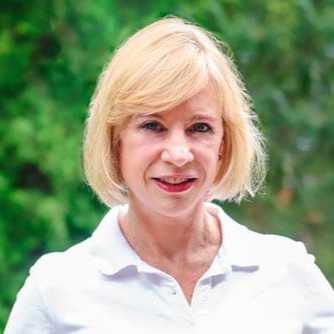
Interview by Titans Of Tomorrow
Titans Of Tomorrow is a trading education YouTube channel that interviews professional traders and investors about strategy, risk, and the psychology of long careers in the markets.
Linda Raschke, a former hedge fund manager and equity options market maker, explains why the world's best funds hold positions for less than 24 hours and why trend following demands capital most individuals do not have. She walks through her skepticism of order flow, ATR-based exits, dollars-per-time-unit trade selection, and the profit centers she ran as a CTA. The conversation closes on flow states, AI tools, and the habits behind a four-decade trading career.
Key Insights
- Market & timeframe
- Trade short: intraday out to a few days. Look for dollars per time unit — get in where the market can pay the most in the least time — and avoid horizons where certainty decays.
- What to ignore
- Order flow and oscillators are derivatives of price and cannot produce a testable edge. Strip the toolset to essentials; two watches never agree.
- Time of day
- Breakouts and range expansion work best off the session open. Days of the week and seasons carry their own volume rhythms.
- Setup
- Model excursion and breakout configuration before entry: how far price may move against you, and whether the breakout is a range, channel, or ABC pattern.
- Stops
- Measure risk in ATR units on the timeframe you trade and use a volatility stop. On the best trades, any reasonable technique keeps you in.
- Exits
- Trail only about 15% of the time. Most trades should play for a fixed target or scale out in pieces, following Kaufman's math.
- Sizing
- Keep bets equal and think in units, not dollars. Discretionary traders cut size in a drawdown; systematic traders do not, because the next big win may be close.
- Routine
- A half-hour game plan the night before, execution delegated, and a day or two off when stress builds.

Why the world's best funds hold for under 24 hours
Linda points to Renaissance's Medallion and Monroe Trout as funds that hold positions for less than a day, arguing their edge is infrastructure and scale. Trend following requires enough capital to spread across many markets and the tolerance for 40% drawdowns — a poor fit for most individuals.
Predicting is an evil word
Asked whether past price predicts future price, Linda says a one- or two-bar edge exists but certainty decays as the horizon lengthens. Every added day introduces variables into an open system, so she trades probability rather than prediction.
You can't read big money — and that's the retail advantage
Linda explains why volume cannot reveal institutional intent: a fund like Fidelity may need two weeks just to cut a large position in half. The retail trader's edge is the opposite — liquidity and the freedom to enter and exit in seconds.
Two watches: eliminate redundancies, indicators are derivatives
Linda dismisses order flow as the latest fad and argues oscillators are derivatives of price that cannot produce a testable edge. Her rule is to strip the toolset down to essentials — "if you have two watches, you'll never know what time it is" — and measure volatility with ATR instead.
Order flow mirrors the bar chart and is distorted by the clock
Linda says order flow merely restates what the bar chart already shows and is distorted by time-of-day volume patterns. She prefers higher-timeframe structure around logical swing highs and lows.
Time of day, day of week, and seasonality shape expectancy
Breakouts and range expansions work best off the session open, Linda says, while Mondays run lighter and certain months and quarter-ends carry heavier volume. Volume alone can cancel out — what matters is the imbalance, not the raw total.
The volume-spike test: 80% at prior swing highs and lows
Linda offers a simple experiment: mark an intraday volume spike and drop to a one-minute chart. Eighty percent of the time it sits at a prior swing high or low, evidence that algos trigger off channel breaks.
Can retail survive? Get the main idea right
Linda says retail traders survive by being opportunistic — waiting until one side is pulled offside — rather than copying institutions. Eliminating your biggest loser each year would make you several times more profitable, and getting the main idea right is most of the game.
Initial trade location, money management, and the outliers
Linda stresses initial trade location and money management over entry tricks. The real money, she says, is in understanding outliers and aberrations — the changes in historical relationships that everyday chart reading misses.
Dollars per time unit and the actuarial table
Linda explains the phrase she learned from a mentor: get in where the market can pay the most dollars in the least time. She frames exits as an actuarial table built from ATR targets, trailing stops, and time stops.
ATR units, springs and traps, and the stop that keeps you in
The host challenges whether trailing stops are only for abnormal outcomes. Linda explains ATR units, springs and traps, and Welles Wilder's volatility stop — and why the best trades keep you in regardless of technique.
Trailing is optimal only 15% of the time; scale out instead
Linda says most of the time you should play for a small or large target, or scale out, rather than use a trailing stop. She cites Perry Kaufman's math for scaling out in pieces and warns against trying to trail everything.
S&P day trading: the opening bulge, noon reversal, 2pm return
Linda traces how her profit centers began with S&P day trading: the crowd pays up off the open, a counter-trend reaction appears near noon as specialists rebuild inventory, and the afternoon brings the return.
The profit centers and their quarterly rotation
Linda lays out her profit centers — short-term scalping, one-day-in/one-day-out volatility breakouts, the weekly/daily pullback setup, and opportunistic seasonal trades — and explains how their quarterly rotation diversified her P&L.
Even bet size, trading in units, and delegating execution
Linda keeps every bet the same size and thinks in units rather than dollars, having an assistant execute so she never touches the order ticket. The game is played on the board, not in the account balance.
Standardized risk, drawdown cuts, and six losers in a row
Linda contrasts standardized risk with dynamic sizing: discretionary traders must cut size during a drawdown, but systematic traders should not, because the drawdown may precede the next big win. Even a 90% win rate produces six losers in a row, so sizing must allow for the streak.
Stress depends on your wealth profile; take days off
Linda says a 20% drawdown means something different to someone with $20 million than to someone living off the account. When stress builds, take a day or two off before it produces unconscious mistakes.
Routines: a half-hour game plan and nine years not knowing net worth
Linda describes her routines — a half-hour game plan the night before, no meditation — and recalls nine years of not knowing her own net worth because she loved playing the game. She eliminated distractions to keep the process simple.
Thick skin and "I've never made a trade off of intuition"
Linda talks about temperament and resilience, saying life experience builds the thick skin trading requires. She is emphatic that she has never made a trade off intuition — the signal has to be a quantifiable pattern or condition.
Flow state is pattern recognition, not magic
Linda describes flow as losing verbal processing: when she trades best she is not thinking, just recognizing a test-and-reject she has seen thousands of times. What feels like intuition is pattern recognition not yet put to paper.
Flow in drawdowns and paper-trading a breakout system
Flow is available in drawdowns too, Linda says, because it is about playing the game rather than winning the last hand. She suggests paper-trading a simple volatility breakout system across five markets to build process over outcome.
Modeling excursion and the three breakout configurations
Linda says you should know at entry how much room to give the trade and what failure looks like. She models the excursion on either side of entry and classifies breakouts by configuration: range or consolidation, channel, or ABC pattern.
Shutting the fund, writing Trading Sardines, building with AI
After closing her fund, Linda found that auditors, attorneys, IT, and $7,000-a-month data feeds outweighed the fun of trading. She wrote Trading Sardines and now spends her days building AI tools.
AI's two uses: streamline the process or train the model
Linda sees two distinct uses for AI in trading: streamlining process and coding, and model training. General LLMs cannot do the second — you must train on patterns and string components together.
Is this time different? Gradual change and democratized tools
Asked whether markets have fundamentally changed, Linda says change is gradual and the tools have democratized. A retail trader can now replicate much of what Renaissance does for $500 a month instead of $50 million.
Longevity: stay healthy and keep the game fun
Linda's longevity advice is to stay healthy — the body gives you energy — and to keep the game fun. She points to Buffett and other traders still at it decades on because they love it.