Linda Raschke - She MASTERED Trading | Top 20 World Trader & Market Wizard
Interview by Words of Rizdom
Words of Rizdom is a trading podcast and YouTube channel known for long-form interviews with the world's most successful verified retail traders. Hosted by Riz Iqbal, the show has built a reputation for drawing out actionable insights from seven and eight-figure independent traders across stocks, futures, and crypto markets.
Linda Raschke returns to Words of Rizdom for a wide-ranging conversation on the mindset, process, and technical edge behind a four-decade trading career. She explains why she trades pure technicals, how Turtle Soup got its name, how she tests models in three-year blocks and demands a 300-trade sample, and why she stopped looking at her daily P&L. Along the way she covers single-minded focus, cognitive biases, the negative-sum math of futures trading, and the routines and support system that keep her in the game.
Books Mentioned

Key Insights
- Bottom line
- The market does not care about gender, race, or background; it pays the bottom line. Bring single-minded focus and the ability to adapt when the game changes.
- Edge
- Trade pure technicals and hunt fat tails. News and order flow are optional; the money is in recognizing outliers that will not revert to the mean.
- Preparation
- Build a homework sheet each night across roughly 20 markets, then trade only the three to five that qualify.
- Learning
- Learn one pattern for six months on a walk-forward basis. Do not add anything until you can test it properly.
- Testing
- Test models in three-year blocks across bull, bear, and dead markets, and demand 300 trades before believing the result.
- Execution
- Stay discretionary, but benchmark every decision against simple models with two variables and one filter.
- Sizing & risk
- Normalize every market to its average dollar range, so each $100,000 buys one unit. Correlations break in a crisis; close the account at a 10% drawdown.
- Scoreboard
- Do not watch daily P&L. Delegate the bookkeeping, stay focused on process, and keep an even emotional keel.

It's all 100% bottom line business
Linda pushes back on being introduced as one of the best female traders, saying the market is indifferent to gender, race, and background — it is a 100% bottom-line business. Asked what separates her, she names single-minded focus first, tracing it to years of practicing piano six hours at a time. She warns that every pull from social media, TV, or noise reduces the odds of long-term success.
Adversity builds the confidence to trade
Linda describes a decade of adversity from roughly age 14 to 24 and argues that overcoming it early builds the character to withstand later stress. That experience becomes self-confidence, which she says is eroded every time a trader lets someone else's opinion stand in for their own judgment. She estimates it takes at least ten years to find a durable edge.
Social media is engineered to juice dopamine
Linda distinguishes social interaction from the work of trading and recommends drawing a boundary between them. She cites trading coach Steve Ward's overlapping-circles model: during the session, do your own work or talk with trusted peers about anything except trade ideas. Platforms are designed to trigger dopamine, she says, so the trader has to recognize the addiction and find other outlets.
The last trait you need is adaptability
Linda says trading is not in her DNA and that she no longer trades full-time or with the leverage she once used, but she almost always has a position on. She posts charts to show the power of pure technicals: no news, no order flow, just price patterns readers can study for themselves. Her final trait for durable success is adaptability, because the games that work — like the momentum playbook of the current bull market — eventually disappear.
Superstar traders recognize what won't revert
Linda argues that humans still beat algorithms at processing relationships between markets, prices, and data points. People instinctively arb any relationship that stretches beyond its normal range, but the real edge is recognizing when an outlier will keep going instead of reverting. Experience lets a trader see an unusual move unfolding faster than an algorithm trained on past data.
Relationship intelligence is a different kind of intelligence
Linda says understanding relationships does not require a college education or a high SAT score, which she notes proprietary firms often screen for. Spatial reasoning — seeing which piece completes a pattern — is another form of intelligence that matters in markets. She ties both to a trader's ability to read price action relative to their own entry rather than forcing everything into a quantitative framework.
Intuition is compounded experience
Linda defines intuition as the compounding of decades of chart experience, not a mystical gut feeling. She sets up 20 markets each night from a homework sheet and trades only the three to five that qualify, hunting fat tails rather than small profit targets. She illustrates it with a coffee trade: she flattened it when it looked like another false breakout, re-entered the next day without a chart, and caught her biggest winner of the day.
Confidence is built through action
Asked whether confidence comes from seeing the same patterns repeat, Linda says action produces confidence: the first attempts are hard to trust, but repeated results validate the read. She also believes some baseline self-belief must already exist, often from childhood or sport. By now her execution is automatic — she deliberately avoids narrating the trade in words because verbalizing it would tangle her up and stop her pulling the trigger.
The $89,000 blowup at 22
Linda recalls blowing out at 22 by selling straddles on a takeover stock, a loss she memorialized in a chapter called "Oops." She did not want to file bankruptcy, so she spent the next five years as an indentured servant to the clearing firm, paying back every cent while everybody else negotiated their deals. The experience kept her in the game but made those years miserable.
The only goal she ever wrote down
Linda says she never thought about reaching the heights her career would reach; she stays day-to-day and is superstitious about looking too far ahead. During a two-year illness early on, she listened to Tony Robbins cassette tapes and wrote down one goal — a dollar amount within three years. She hit it in half the time.
Never look at your daily balances
Linda used to tally her P&L every day until a strong July in the mid-1980s left her impressed with herself — and she did not make a new high for about five months. She stopped looking at daily balances after that. Running her fund, a colleague kept the numbers for investors while she stayed focused on process, which she says kept her on an even emotional keel; she acknowledges a small account with living expenses makes that discipline much harder.
Process is routines and a support system
Linda defines process as routines and rituals: logging trades, writing a game plan, and reviewing charts at the same time in the same way. She also built a support system around the work — a frugal early life, a husband who ran the household, and a business manager who handled clients and bills. Traders who cannot afford that infrastructure can pool resources, she says, if they want it badly enough.
Eat, breathe, drink markets
Asked whether she ran businesses outside trading, Linda says it was pretty much purely trading. During her divorce she had started a small trading room; Ron Shear, who ran a network of prop shops, offered to pay her for ideas, and she brought in a chart-savvy partner. The business paid everyone for a couple of years before it faded. She describes her life as eating, breathing, and drinking markets — and liking it that way.
You have to love the game
Linda doubts most people can replicate a long trading career unless they love the game itself. She points to an 80-something friend who still plays bridge every morning and to Serena Williams and Novak Djokovic, whose lives are built around their sport. If you truly love trading, she says, you will not stop to become an investor; you would only step back if the pace and exclusion of an outside life became too much.
Fewer than 10% of futures accounts are profitable
Linda cites a Refco study of hundreds of thousands of accounts: under 10% finished a year profitable by even $1, and only about 2% made a living from trading. A TradeStation check years later suggested roughly the same, and she expects about 5% of today's accounts to be profitable five years out. The game is negative-sum after commissions, the spread, and slippage, played against the best-capitalized minds; she adds that the biggest cognitive bias is believing none apply to you.
Information is not an edge
Linda says access to more information has not moved the profitability statistics. Information only matters through how the market reacts to it, and most of what a retail trader receives is already known, leaked, or priced. She calls it a distraction that causes unforced errors, then contrasts it with constructive information like volume per bar — which she learned to trade without for her first decade and now strips down because it is largely redundant with range and time of day.
The market is the best teacher
Linda argues that reading more books and taking more courses does not accelerate learning; the market teaches on a walk-forward basis. The old technical-analysis classics cover the essentials — support, resistance, trend, acceleration, deceleration — and the work is to make a daily call, see what happens, and repeat. She recommends learning one pattern for six months before adding anything, and says the Market Wizards books work because they show people who arrived at their own methods.
There is no Holy Grail
When the host describes traders hunting a Holy Grail and assuming complexity is required, Linda says that behavior has been going on for 60 years — the old bucket shops and newsletter writers did the same. She has no problem with exploring new ideas; conferences and books are part of the process. The mistake is applying something before understanding it, then jumping to the next thing when it fails.
Do your own work
Linda says the difference is work ethic: people are lazy and do not want to do their own research. When she trades full-tilt, she spends at least an hour every evening logging numbers and preparing the next day's trade sheet, and her research never stops. She compares it to doing jigsaw puzzles every night — most people would rather watch Netflix, and that is why the same failure rate persists.
Turtle soup: a joke that became a strategy
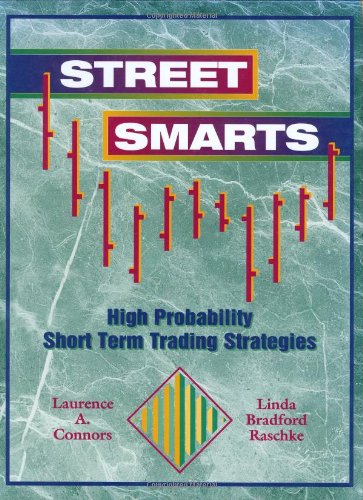
Linda explains that Turtle Soup came from Street Smarts, the 1996 book she wrote with Larry Connors. The name was tongue-in-cheek: the Turtle trend-following system bought 20-day highs, so when that breakout failed, the reversal was "turtle soup." She models the signal's one-day longevity, frequency, entry delay, and decay — building what she calls actuarial grids — and notes the play is mostly semantics, with no ego about others using the name.
100% discretionary, benchmarked against models
Linda says her own trading is 100% discretionary, though everything sits around models. She ran a volatility breakout system in her fund as a separate profit center; it had an edge but so much variance that it only added about 1% to the bottom line after costs. Her discretionary models typically use two variables and one filter, have held up for 40 years, and give her a computer benchmark to judge her own execution against.
Test in blocks, and demand 300 trades
Linda tests models in three-year blocks so a single unusual event — like natural gas before fracking — does not contaminate the results. She insists on seeing bull, bear, and dead markets across many instruments, and warns that people draw conclusions from samples as small as 26 trades. Her rule is 300 trades before trusting anything; if one market does not provide that frequency, she pools across markets on the principle that a market is a market.
Even bet size, broken correlations, and a 10% cutoff
Linda says her trade size was much larger when she was younger and that she came to believe in an even bet size. She normalizes every market to its average dollar range — six corn contracts to one crude contract — so each $100,000 of capital buys one unit, and she recomputes quarterly. Correlations break down in outlier events, so diversification offers little protection when everything liquidates at once; her answer is a hard cutoff that closes the whole account after a 10% drawdown. Risk also includes time in the market: less time exposed means less exposure to event risk.