
Ted Zhang
Ted Zhang is a growth and momentum equity trader who co-manages the Turboction portfolio at River Asset Management — a registered investment advisory firm overseeing more than $350 million — alongside childhood friend and fellow trader Connor. At 24, without a finance degree (he studied biology on a pre-med track before pivoting), Zhang co-managed roughly $25 million in client capital within the firm's higher-beta portfolio, having grown assets under management from the high single digits to that level through social media distribution and track record performance. His system integrates CANSLIM fundamental criteria with Weinstein-style stage analysis on the weekly chart, intermediate-term trend following using 21-, 50-, and 200-day EMA alignment, ATR-based extension trimming, and climax-top sell rules drawn from Minervini. Zhang discovered markets during the 2020 COVID crash through SPAC trading before a major drawdown in early 2021 forced him to rebuild from first principles on the O'Neil and Weinstein canon. He interned unpaid at TraderLion, helping build a Stan Weinstein stage analysis course, and cites Druckenmiller, O'Neil, Kullamägi, and Breitstein among his key influences. He documents his market process publicly on X (formerly Twitter).
Videos
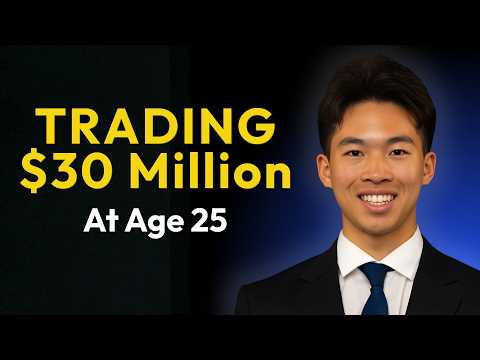
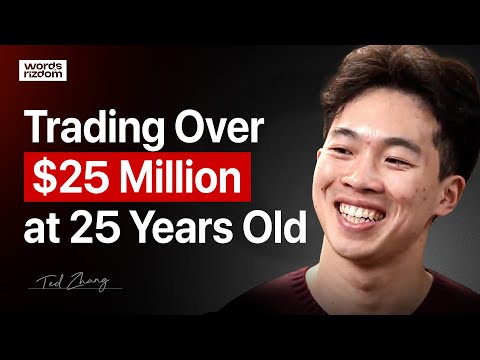
Intro: managing $30 million at age 25
▶ 2m 22sThe episode opens with a highlight reel: Ted Zhang, a 25-year-old portfolio manager at Reverd Asset Management — a firm managing over $400 million — reflects on how COVID sent him home from college in spring 2020 and his 'curious mind instantly got hooked on the markets.' Host Richard Moglen introduces Ted and sets the stage for a deep dive into his thematic catalyst momentum system.
From predental student to markets — how COVID sparked a trading career
▶ 4m 47sTed Zhang was on track to become an oral surgeon, having completed a premed/predental track and earned dental school acceptances, when COVID sent him home in spring 2020. With time and his dad's CNBC in the background, his curiosity pulled him toward the markets. He started with money from Uber Eats and DoorDash — around $5–10K — and plunged it all in, turning that initial stake into at least 15–20x in 2020–21. The gains came fast, but so did the inevitable giveback that followed.
The 50% drawdown that shaped everything — paper cuts, not one blow
▶ 4m 51sAfter his 2020–21 run, Ted gave back roughly 50% of his gains — but not all at once. It was a gradual erosion of paper cuts, which he credits with keeping the experience survivable. A critical factor: he had to step away to study for and take the dental admissions exam, which forced a trading hiatus and prevented a full destruction of capital. That combination of enforced discipline and a softer drawdown gave him the time and clarity to study systematically before returning with a real framework.
Building a style after the drawdown — thematic catalyst momentum
▶ 4m 40sComing out of the 50% drawdown, Zhang read the core O'Neal books and converged on a style he calls thematic catalyst momentum — a form of trend following rooted in CAN SLIM principles but modified. The key modification: the team doesn't strictly require earnings and sales for every trade, since sectors like crypto have no earnings but still carry the same momentum characteristics. The style sits within trend following as the broad category, with growth and fundamentals as a useful but not mandatory filter.
Cold-DM'ing into Reverd — how Don's data discipline shaped the system
▶ 4mTed joined Reverd Asset Management under Don, whom he cold-DM'd on social media asking for a job. Don's defining characteristic is extreme data discipline: he tracks every statistic in elaborate spreadsheets and builds systematic models to manage risk. The firm's origin story is personal — Don built the system from O'Neal's How to Make Money in Stocks after a family loss in the 2000 bear market, turning tragedy into one of the most disciplined frameworks Ted has encountered. The mentorship crystallized Ted's understanding that trading success is built on repeatable, measured processes rather than intuition.
Risk-first philosophy — don't lose money, and define your floor first
▶ 4m 8sDon's biggest rule in portfolio management — which Ted cites repeatedly — is don't lose money: define open risk before entering any position and plan for what happens if the thesis is wrong. Ted frames risk and reward as siblings: the trader's job is to manage risk in a way that preserves upside. Asymmetric risk-reward isn't a vague concept but a structure built around a specific price floor. If you can identify where a stock is very unlikely to trade below, you can size accordingly. The entire Reverd system flows from this principle: risk is defined first, then everything else — position size, entry timing, exit rules — is built around it.
The Daily Stoic and O'Neal — the two books that built the foundation
▶ 2m 42sTed walks through the first two pillars of his reading list. The Daily Stoic by Ryan Holiday instilled the core practice of focusing on what you can control — a philosophy he reads a page of daily for over four years, eventually buying the leather-bound edition. The core message: the market will do what it wants; your only job is to control your response. William O'Neal's How to Make Money in Stocks is the literal foundation of Reverd: Don built the firm's entire system from it, and the CAN SLIM framework — earnings, chart pattern, supply/demand, leadership, institutional sponsorship, market direction — remains the organizing structure for Ted's stock selection process.
Livermore and Weinstein — timeless principles from a century ago
▶ 3m 30sTed highlights two more foundational books. Jesse Livermore's How to Trade in Stocks, which he is rereading for the third time, reveals that every modern trading principle — market leaders, sister stocks, sector themes, record-keeping — was discovered a century ago. Livermore's observation that 'the market repeats because human nature never changes' is a cornerstone of Ted's conviction in pattern-based trading. Stan Weinstein's Secrets for Profiting in Bull and Bear Markets provides the stage analysis framework: every stock is in one of four stages (basing, advancing, topping, declining), and the first thing Ted does when looking at any chart is identify which stage it's in. Stage analysis is a foundational part of his process.
Darvas, Seykota, and the discipline against impulsivity
▶ 2m 40sTed highlights Nicolas Darvas's How I Made $2,000,000 in the Stock Market as a model of process: Darvas was traveling the world as a dancer, not staring at quotes, and his system of boxing price action and using telegram-based stop orders enforced distance from the screen — exactly the discipline most traders lack. Ed Seykota's observation reinforces the same truth: a quote monitor becomes a slot machine that makes you overtrade. The more you watch, the more you act, and the more you act, the worse your results. Darvas's method of 'only looking at prices once a day through the newspaper' is a lesson in the value of forced distance from the noise.
"Ed Seykota says if you sit in front of the quote monitor, it just becomes a slot machine."
Minervini, Druckenmiller, and why the same book hits differently each time
▶ 3m 46sTed rounds out his reading list with Mark Minervini's books (Trade Like a Stock Market Wizard and the Market Wizards series) and Stanley Druckenmiller's interviews — he has compiled a full playlist of Druckenmiller interviews on YouTube and studies them repeatedly. He also adds Robert Greene's 48 Laws of Power as a surprising inclusion on understanding competitive dynamics. Ted pushes the habit of rereading the same great books rather than racing through many: when you come back to a book as a more experienced trader, you find layers you missed. Heraclitus's river analogy applies — you're not the same trader as when you last read it, so the same text speaks to you differently.
Absorbing inputs without losing your style — and the competitive edge from sports
▶ 4m 12sTed describes how he filters the flood of podcasts, books, and online content without losing his own framework. The key is confidence in a core style: he can take small pieces from any source — a nuance here, an entry variation there — test whether it works, and discard what doesn't fit. Excessive information consumption only becomes a problem before a stable foundation is built. He also credits the competitive instincts from soccer and video games as directly transferable: both markets and sports are player-versus-player, with strategic thinking under pressure and a scoreboard that holds you accountable. Robert Greene's Mastery supports the idea that trading aptitude reflects a passion rooted in childhood, not a skill chosen in adulthood.
The magic elixir — liquidity, ADR, and building a checklist for a super stock
▶ 3m 2sTed and his partner Conor took CAN SLIM and modified it into what they call the magic elixir — a checklist of characteristics that define a super stock. The first criteria are technical: liquidity (no getting trapped, especially with client money — typically $300M+ average daily volume for the main fund) and high ADR/ATR (stocks moving less than 1% a day require too long to produce meaningful gains, and the wait erodes conviction). The name is deliberate: no single ingredient works alone, but when all criteria converge, the resulting trade has a qualitatively different character than stocks meeting only some criteria.
Earnings growth, themes, and chart confirmation — the final elixir ingredients
▶ 3m 10sBeyond liquidity and ADR, Ted's magic elixir requires strong fundamentals tied to a growth story or catalyst, a stock that belongs to a hot sector theme (AI, rare earths, space, crypto), and chart confirmation — the setup must be visible in price action. The framework is rooted in O'Neal but adapted for a more volatile, theme-driven modern market where a stock like Palantir can gap 25% on guidance and run for weeks. The checklist is applied systematically: if a stock doesn't check every box, it doesn't get full size. The discipline is in the rejection — saying no to almost everything is what makes the yeses count.
Secular vs. cyclical themes — and why linearity is the final differentiator
▶ 2m 45sNot all themes are equal: secular themes (tech revolutions, AI, rare earths) produce multi-year compounding moves because underlying earnings growth is structural. Cyclical themes (housing, financials, retail) rise and fall with the economic cycle and interest rates. Zhang focuses on secular themes for the big sustainable moves. When two stocks both clear the magic elixir criteria, the tiebreaker is linearity: how consistently does the stock trend upward without violating prior lows? A stock that makes new highs without breaking the previous day's low, day after day, is categorically different from a choppy stock. GDX vs. the choppy version of that same chart two years earlier is his go-to example of the distinction.
Finding the top stocks within themes — and why the best setups stand alone
▶ 2m 45sWithin each hot theme, Ted narrows to the top one to three stocks — the names with the strongest fundamentals, the cleanest charts, and the highest institutional interest. He notes that recent themes have cascaded: AI drove energy plays, then software plays, then rare earths. A good theme produces multiple waves of opportunity across related sectors. The key discipline: don't chase every name in a hot sector. Find the leader — the stock that first reclaimed all moving averages, showed the tightest consolidation, and produced the most linear advance — and focus your size there. The second and third names in a theme almost always produce weaker returns with more chop.
Position sizing at Reverd — 50bps max risk and the three-fund structure
▶ 2m 35sReverd's risk framework starts from the portfolio level: they typically risk no more than 50 basis points per trade, and increasingly closer to 15–25bps, determined by how many magic elixir criteria the opportunity checks and their conviction level — the more boxes a stock checks, the more risk they allocate. Position sizes are capped at 12.5% in Turbo (the aggressive fund targeting accredited investors) and 8% in Protection (skewed to retirement accounts). All three funds — Turbo, Grow, and Protection — operate from the same playbook but with different risk tolerances calibrated to the client base.
Index overlay and correlation management — don't let one theme sink the portfolio
▶ 2m 35sAll three Reverd funds include an index overlay in 1x, 2x, and 3x S&P that is dialed up or down based on trend-following signals, ensuring broad market exposure is always sized appropriately alongside individual stock positions. Ted also manages cross-position correlation: when the momentum unwind hits — as it did recently with gold, silver, and SanDisk all topping simultaneously — non-correlated bets are what prevent a single theme from sinking the entire portfolio. The goal is a portfolio where not every position goes down on the same day, and the index overlay provides ballast when growth positions are under pressure.
SanDisk (SNDK) trade — spinoff base, MU earnings catalyst, and the memory group move
▶ 2m 40sTed walks through the SNDK trade starting from the fundamental setup: it was a spinoff with a base on the chart, and the trigger was Micron (MU) earnings, during which the conference call flagged a severe supply/demand imbalance in memory. When the fundamental thesis (supply shortage → pricing power) aligns with a hot sector group and the chart shows tight base action with volume, the group move becomes high-probability. Peer names MU, WDX, and STX all worked in parallel, confirming the group rotation. Ted shows the 137% move that followed and emphasizes that paying attention to a group move when you already know the fundamental story is the highest-conviction entry posture.
Measuring linearity — how many days in a row does it hold the prior day's low?
▶ 2m 40sTed introduces a quantitative approach to measuring linearity: count how many consecutive days a stock makes a new high without breaking the previous day's low. He's building a scoring system at Reverd that tracks the percentage of time a stock stays above key moving averages over a given period, turning qualitative 'smoothness' into a numeric score. The more linear the move, the easier it is to hold — linear stocks respect the 5-day and 10-day like guardrails, giving the trader clear exit signals. Choppy stocks break key levels constantly, forcing constant decision-making and eroding conviction.
Reading the SanDisk breakdown signal — the strongest stock breaking is a market warning
▶ 4m 13sAfter an extended move, SNDK gave a breakdown signal that Ted reads as a two-level lesson. At the position level, a negative expectation breaker — a large reversal candle, a lower high, and reconfirmation below a key shelf — is the signal to exit or trim aggressively. At the portfolio level, when the strongest stock in the strongest sector breaks down, it is a canary in the coal mine for the broader market: it typically precedes a choppy or declining environment for growth stocks generally. The timing coincided with geopolitical tensions and a government shutdown scare, underscoring that top-down context and individual chart behavior must both point the same direction for confidence.
The re-entry framework — 50-day test, 20 SMA discipline, and the RMV entry signal
▶ 2m 57sAfter a pullback in SNDK, Ted explains his framework for re-entry: he waits for the stock to reclaim all key moving averages with all slopes rising before adding. He specifically uses the 20 SMA rather than the 8 or 21 EMA because the SMA keeps him out of false starts and reduces frustration — a principle he frames as maximizing reward-to-aggravation, not just reward-to-risk. The inside day low-volatility contraction, confirmed by his RMV indicator flashing below 5, is his precise entry signal. He never adds to a loser — averaging down is explicitly rejected. All position additions come into winning trades with confirmed momentum behind them.
Scaling into SNDK — half-size starters and pyramiding into strength
▶ 3mTed walks through how he scaled into the SNDK position. He started with a half-size position given the holiday-period uncertainty (thin volume, tax-loss harvesting, choppy conditions in late December), then added as the stock confirmed strength — reclaiming rising moving averages and respecting the 10 EMA. The pyramid approach: a starter position at the initial entry, a full-size add when the trend re-establishes, and a trim if the stock loses a key level. He also shows where he added a small starter in a leveraged GDX product (Nugget) using the same framework and it worked immediately, allowing him to pyramid as prior highs became support.
Building cushion in SNDK — partial sells, parabolic phase, and the 2.5%-per-month goal
▶ 5mAs SNDK extended into a parabolic move, Ted's approach was to build a position cushion through partial sells at technical resistance and ATR extensions rather than holding everything for maximum gain. The mindset: 2.5% per month compounding equals roughly 35% per year, which is world-class portfolio management — the goal is to protect gains so the cushion allows more aggressive positioning later. A 10 ATR extension above the 50-day was his trim signal; a bearish engulfing candle on high volume warned of a potential reversal. His acknowledged lesson: he was undersized in this trade (one of the two best opportunities of early 2026), and a pyramid to 7.5% would have made the year in a single position.
Using the 5-minute chart to time intraday exits in a parabolic move
▶ 5m 4sWhen managing a late-stage parabolic position in SNDK, Ted switches to a 5-minute chart to time partial sells. The technique: watch for the stock to push into pre-market highs, reject them on a 5-minute candle, then use the 5-minute open range lows as the trim trigger. He sold 14% of the position at 647.81 when the stock broke the 5-minute open range low — a level that coincided with a half-Livermore level breaking at 650 and the intraday opening price. For managed accounts that can't short, he uses parabolic short entry criteria as his trim signal: if this were a short setup, that is where you'd sell a long.
Gold (GLD) trade — a 10-year cup-with-handle, linear move, and the macro setup
▶ 3m 36sTed walks through the GLD trade as a case study in a non-earnings momentum setup: gold has no EPS, but it checks every other magic elixir criterion — narrative (de-dollarization, government debt, geopolitics), liquidity, high linearity, and a 10-year cup-with-handle base. He initially passed on an earlier base feeling it was too slow, then re-entered when gold reclaimed all moving averages with tight volatility. The setup was confirmed by cross-referencing GDX futures: when the futures chart showed the same base, same moving-average reclaim, and same volume signature, the ETF entry had institutional-grade confirmation.
Gold exit strategy — ATR extensions, 10 EMA close, and the macro liquidation cascade
▶ 3m 54sPartial sells in GLD were triggered by ATR extension signals. The final exit came when gold closed below the 10 EMA — coinciding with futures closing below the same level and a macro shock (hawkish Fed chair nomination plus CME margin hike) that forced a liquidation cascade across precious metals. Ted emphasizes that commodity trade exits require cross-referencing the futures chart, not just the ETF — the futures close below 10 EMA is the definitive signal, and the ETF can lag by minutes or hours. The lesson: when a macro event hits a crowded trade, the exit must be immediate and mechanical — hesitation in a liquidation cascade is the most expensive mistake.
Nugget and Silver — pyramiding, linearity, and the regret of undersizing
▶ 4m 46sTed quickly applies the same magic elixir framework to two more positions. Nugget (a leveraged GDX product) was a small starter at a 20/50 moving average reclaim with an RMV flash; it worked immediately and he pyramided into strength as a prior high became support. Silver (SLV futures) exhibited near-perfect linearity — consecutive tight flags holding the 10 EMA day after day — and his one regret was not pyramiding more aggressively at all-time highs. A bearish engulfing triggered his first trim but he held through two 10-EMA undercut-and-reclaims before the final new high squeezed shorts. Across both trades, the pattern is consistent: the best setups are the ones where holding is easy because the trend is clean, and the main mistake is not sizing up when the chart is screaming.
Palantir (PLTR) — the episodic pivot off a guidance beat
▶ 5m 42sPalantir was an episodic pivot trade off a guidance beat: Ted bought the gap up and held a linear trend above the 10 EMA, trimming at the measured-move target. He describes almost being out of the position at 12.5% of original size when the 'multitude of factors' kicked in — additional elixir criteria flashed, and he knew in real time the move was likely to extend. PLTR's 130% move in a two-month period on a $5 trillion market cap stock was unprecedented, and Ted's main takeaway is that even the biggest stocks can produce momentum-trade returns when the catalyst is powerful enough and the elixir criteria all converge. He also shows how the episodic pivot pattern (gap, flag, continuation) is one of the most repeatable setups in his playbook.
Pre-market scanning — DV leaders, high-volume scans, and AI research tools
▶ 3m 18sTed's pre-market routine takes 30–45 minutes when efficient: he runs a DV leaders scan, an up-in-volume scan (most big catalysts surface here), and a highest-volume-ever scan to catch unusual institutional activity. For fundamental research he uses AI directly in his browser, with a prompt asking what drove a stock's move, all news in the last 90 days, themes, and competitors — output in about 20 seconds versus 30–45 minutes manually. This gives him instant context on whether a pre-market mover has a real catalyst or is just noise.
Focus list discipline — combined position tracking and the blinders that prevent FOMO
▶ 3m 18sTed maintains a combined position list across all client and personal accounts, a pre-market scanner for early movers, and a universal scanner for post-close review. The critical discipline: he only builds from what's on the focus list during market hours — unknown movers aren't seen until after the close, which prevents impulsive chasing. He also tracks a short watchlist for stage 3–4 names breaking down, and the focus list itself is the anti-FOMO mechanism: if a stock isn't on the list, it literally doesn't exist during the trading day. The blinders are intentional — the market shows you thousands of movers, and trying to track them all is how you end up in low-conviction trades.
Stoic adaptation — accept what the market does, fear only abnormal action
▶ 4m 42sTed's journaling practice is built around a stoic principle he adapted specifically for trading: accept that the market will do whatever it wants, and only fear abnormal action. He repurposed the serenity prayer — 'grant me serenity to accept that markets will do what they want regardless of what I want' — and recites it before each session. The journal includes quotes from market wizards he rereads when struggling: Bruce Kovner's 'undertrade, undertrade, undertrade,' Livermore on patience, and the cheetah analogy from Mark Weinstein. Annie Duke's Thinking in Bets principle is woven throughout: judge decisions on process, not results.
Fat pitch analysis — asking 'was it a fat pitch?' after every trade
▶ 4m 42sTed's post-trade journal includes a critical question: was this a fat pitch? All his best winners share a common characteristic — they were obvious to him in real time, not ambiguous. The PLTR gap-up, the SNDK group move, the GLD base break — these were all setups where the chart practically screamed the entry. By tracking which trades were fat pitches and which were forced, he builds a database of his own pattern recognition. The goal over time is to only swing at fat pitches and let the marginal setups pass. His focus list constraint supports this: fewer stocks seen means fewer marginal decisions, which means a higher percentage of fat pitches in the trade log.
Post-market journal — market notes, trade analysis, and inter-asset awareness
▶ 4m 28sTed's post-market journal has distinct sections: market notes with subjective trend assessments (momentum, breadth, new highs/lows), post-trade analysis asking whether the process was sound and whether it was a fat pitch, a situation awareness section monitoring inter-asset correlations (stocks, bonds, crypto, commodities), and a stock trading environment summary with reminders like 'you'll be in drawdown 99% of the time.' He reviews his last 5–50 trade stats and current position health, asking whether he's earned the right to size up based on recent performance.
Weekly journal and Notion AI — reverse synthesis and querying years of data
▶ 7m 1sThe weekly journal uses an organic chemistry analogy: start from the desired end state, then reverse-synthesize each step required — the minimal viable process to get there. Ted also uses Notion AI to query his entire multi-year journal history for pattern recognition: 'summarize my strengths and weaknesses from this date to that date.' The AI reads years of his own trade notes and distills patterns he might miss in real time. He views trading as a complex system like the human body — you learn each subsystem (risk management, position sizing, entry tactics, sell rules, daily process, post-analysis) separately, then piece them together. The weekly review is where the subsystems are calibrated against each other.
COVID crash, SPACs, and the asymmetric insight that started everything
▶ 3m 57sTed Zhang explains how a COVID quarantine in spring 2020 — watching his father's CNBC during a crashing market — was his entry point into trading at age 19, with no finance background. With no technical knowledge he noticed a structural pattern in SPACs: these shell companies traded near the $10 net asset value floor because shareholders would be repaid that amount if no merger occurred, creating capped downside with open upside when a merger rumor hit. He began accumulating near NAV and selling into announcement rallies — a self-discovered, intuitive understanding of asymmetric leverage before he knew what the term meant.
"Somehow just like some way without even learning, I intuitively understood asymmetric leverage."
How putting yourself out there got a 22-year-old into a hedge fund
▶ 2m 5sThe host notes that luck met preparation in Ted's story: building a personal brand on X, sharing market insights publicly, and cold-DM'ing 25 to 50 portfolio managers was what put Ted in position. He draws a parallel to Joe Alugba, another young trader who did the exact same thing and now works at a London hedge fund at age 21. Ted's point: the internet has demolished the access barrier to talented people, but most people never make the ask. A cold DM to someone whose work you respect — genuine, specific, and backed by a visible track record of public content — has a meaningful response rate that most people underestimate.
"You know, with the internet now, it really democratizes who you can meet. Putting yourself out there — it's in front of the entire world."
The Nicola trade: how a $76 exit out of an $18 SPAC entry became the first big win
▶ 3m 32sHost asks how Ted developed market knowledge so quickly without a finance background. Ted credits trial and error: diving into the COVID crash with no technical knowledge, he built his edge around SPACs by observing the structure — $10 NAV floor, asymmetric upside. The VTIQ/Nicola SPAC was his first major win: bought shares near $18, the definite merger agreement was announced, the stock ran to $70-80, and Ted sold all shares around $76 after a small pullback. He is candid that in 2020 with the Fed pumping liquidity, it was like shooting fish in a barrel — there wasn't a lot of skill to it. The broader SPACs ecosystem — Lucid, Tattooed Chef, Chamath's IPO series — kept feeding the edge for six to eight months.
"That was really the first big trade that got me into it. And back then in 2020 with the Fed putting so much money, it was just like shooting fish in a barrel."
When the SPACs edge vanished: a 50% drawdown and the revenge trading trap
▶ 1m 38sHeading into February 2021, the Fed liquidity that had fueled SPACs dried up overnight and the entire edge vanished in weeks. Ted drew down 50-60% from his peak. He retained perspective because he was still up from his starting point, but the real lesson was about the psychology of losing. The host asks what the inner dialogue was during a 50% drawdown. Ted explains the worst possible response is to size up and force trades — revenge trading turns a manageable loss into a catastrophe. A forced break from trading for dental admissions prep turned out to be exactly the psychological reset he needed to approach markets fresh rather than emotionally reactive.
"The worst thing you could possibly do is if you're having a bad period is to size up."
From SPACs intuition to CANSLIM: building a real system from first principles
▶ 4mAfter the drawdown and a break for dental admissions prep, Ted discovered William O'Neil's How to Make Money in Stocks and then built out the broader trading canon: Reminiscence of a Stock Operator, the Market Wizards series, Minervini, and Weinstein. The CANSLIM framework organized his thinking: Current quarterly earnings (25%+ YoY growth), Annual earnings trajectory, New product or service, Supply and demand reading via price-volume, Leader vs. lagger in relative strength, Institutional ownership quality, and Market direction as the most important overlay. Having prior market experience meant he could immediately map every principle to something he had lived through.
"No matter what, just reading the books or taking courses, it's not going to work. Like you need to be in there."
Why O'Neil's research back to 1950 still holds: supply, demand, and human psychology don't change
▶ 4m 40sThe host asks why elite growth stock traders all converge on the same books — a pattern absent in futures and forex communities. Ted points to O'Neil's How to Make Money in Stocks: O'Neil studied every major market winner going back to 1950 and found the same price-volume patterns repeating across every decade. The CANSLIM system is built on those findings. Ted's explanation for why it still works: stock tickers change, participants change, but supply, demand, and human psychology have not changed in tens of thousands of years. Any methodology rooted in those invariants has a permanent operating base; methods tied to a specific technology era or regulatory moment are inherently temporary.
"The laws of supply and demand don't change. The laws of human psychology don't change."
Ikigai and the Mastery exercise: why Ted chose trading over dental school
▶ 2m 51sRobert Greene's Mastery prompted Ted to do an exercise: look back at childhood obsessions and natural inclinations. He played competitive soccer from age 5 to 18 — drawn to pattern recognition, competition, and performance under pressure. Trading matched that wiring in a way dentistry never could. The Japanese ikigai framework — the intersection of what you love, what you're good at, what can make money, and what helps others — gave him intellectual permission to leave the safe, expected path. The decision was not impulsive: it came after identifying that his natural inclinations pointed unambiguously at markets.
"Find that life task of yours."
Managing other people's money: client emotions, SEC registration, and earning trust
▶ 4m 21sManaging external capital adds a second emotional management challenge alongside the trading itself: client fear during drawdowns, client greed asking for more exposure during rallies. River Asset Management is SEC-registered with clients primarily near or in retirement. Ted and Connor did not receive client capital immediately — their bosses took a page from William O'Neil's playbook, hiring portfolio managers to trade firm capital first. Ted and Connor spent six months on tracking accounts, built a demonstrable track record, then started with their bosses' personal money and Ted's parents' money before outside clients came in. This gradual trust-building process is also a structural protection: it means the people deploying capital have real evidence of execution quality.
"Managing your own capital it's just you and your own emotions... with clients you also have to manage their emotions."
Active drawdown prevention: River's mission and why buy-and-hold fails retirees
▶ 1m 57sTed contrasts River's approach with traditional advisors who put clients in mutual funds with quarterly rebalancing and stay invested through everything. River's value proposition: timing the markets is possible by getting into cash when markets weaken and preventing those devastating 30-50% drawdowns. This matters enormously for clients heading into retirement who need that nest egg to live off of. The compounding math: if you prevent the drawdowns, you compound from a higher capital base when the next bull market begins. A 50% drawdown requires a 100% return just to break even — the asymmetry of losses means avoiding large drawdowns compounds wealth more effectively than chasing higher returns.
"If you prevent the draw downs, you're compounding from a higher capital base."
Grow vs. Turbo: portfolio structure, allocation, and the honesty about a young track record
▶ 2m 59sRiver runs two portfolios: Grow Protection (designed to match S&P returns with dramatically lower drawdowns — max 13-14% in the COVID crash and 2022 inflation bear vs. the market's 30-40%) and Turboction (Ted and Connor's higher-beta portfolio targeting market outperformance with 5-12.5% position sizing). Clients are allocated based on age and risk tolerance — an 80-year-old might be 70-80% in Grow, while younger clients comfortable with more risk go heavier in Turbo. Ted is candid that Turboction's track record (launched early 2024) is too young to be meaningful — he won't consider it proven until it survives a real multi-year bear market.
"A track record is not meaningful until it has survived at least one complete market cycle including a real bear market."
Time horizon, sector agnosticism, and the momentum stock selection discipline
▶ 3m 1sTed defines their style as intermediate-term trend following — average hold time of weeks to multiple months, trying to catch the swing move, rarely achieving long-term capital gains. They are sector-agnostic — trade anything with momentum — but the portfolio naturally tilts toward growth and technology because those are where the biggest moves happen. The key risk management constraint: they cannot buy extended stocks and must wait for pullbacks or bases to build positions. Forcing discipline on entry keeps them out of the FOMO trades that cause the most damage in high-beta names. Ted explains they use position sizing and hard stops to manage the volatility that comes with aggressive growth stocks.
"We're intermediate term trend followers. Our average hold for winners is probably at least a few weeks to multiple months."
AI bubble thesis: recognizing euphoria without calling the top too early
▶ 3m 11sTed describes his late-2024 market read: signs of a bubble exist — new participants, extended valuations, revolutionary technology narrative, quantum names up 100-200% in weeks — but bubbles can last longer than expected and require a catalyst to pop, historically a Fed tightening cycle. He notes the gap between AI hype and reality: current AI cannot replace a human knowledge worker, and humanoid robots are nowhere near replacing humans at scale. But he refuses to make predictions: "I'm not an absolute expert in AI." The practical point: identifying a bubble is not a sell signal — bubbles can last years, and the final phase often produces the largest and fastest gains.
"You don't want to see a bubble as a negative thing. When I identify a bubble, I want to add more fuel to the bubble by buying it."
Nvidia's bearish engulfing: the distribution signal that warned the party was ending
▶ 3m 20sTed points to Nvidia's post-earnings price action as the distribution warning: the stock gapped up on extraordinary news (Blackwell chips, revenue beat), the open was the high with no follow-through all day, and it closed at the lows — a bearish engulfing candle through multiple moving averages. This is one of the most reliable distribution signals: exceptional news with no price follow-through means every seller who wanted to distribute into strength has done so. The market had been building toward this: quantum computing names up 100-200% in weeks, Palantir's rapid ascent, everything going vertical. When the leader of the whole move shows that pattern, it is a flashing warning about the broader environment.
"When a stock gaps up on exceptional news and the open is the high with a close at the lows, it reveals that every seller who wanted to distribute into strength has done so."
Reading market health: the three-layer trend gauge and what watchlist density tells you
▶ 2m 30sTed runs a structured market assessment across three layers: short-term trend (21 EMA), medium-term trend (50-day), and long-term trend (200-day). The best environment has all three stacked in order with price above the 21 and watchlists overflowing with setups. The worst environment has the 8 and 21 crossing below the 50 — which happened for the first time in 136 sessions during the late-November 2024 recording. He also reads market leaders and watchlist density as a qualitative confirmation: when everyone is frustrated and focused on one name, the environment is failing. When setups are everywhere and no one is complaining, it is game-on.
"There's times to grow assets and there's times to protect."
Exit discipline: ATR extensions, climax top signals, and how to trail winners
▶ 2m 51sTed's exit framework operates in two modes. Selling into strength: trim when price reaches 3-4 ATRs above the 21 EMA, or 8-10 ATRs above the 50-day moving average. Climax top signals that accelerate trimming include the stock heading toward 12 o'clock trajectory, multiple gap-ups in a row, 7-8 green days out of 10, and the largest daily volume ever after an extended move — institutional capitulation to the upside, not accumulation. Trailing rule: exit most of the position on a close below the 21 EMA; trail a smaller remaining piece on the 50-day or 10-week for the highest-conviction fundamental names. The combination captures both the bulk of the move and the occasional multi-month runner.
"Always trail a piece and sell into weakness because you never know how high a stock's going to go."
Price targets, measured moves, and why symmetry shows you where to take profits
▶ 2m 33sTed explains how he sets price expectations using the concept of market symmetry: the first leg of a move and the second leg are often similar in magnitude, separated by a base. You can use that to set reasonable targets for taking partial profits into strength — not because the target must hit, but because the probabilities favor a pullback at that measured-move zone, and trimming smoothes the equity curve. He contrasts this with crypto traders who set price targets and sell completely, then watch the asset go another 10x. River always trails a piece because you never know how far a stock will run. The move in symmetry is a guide, not a hard exit — use it to manage risk, not to cap returns.
"Markets like to move in symmetry. The second leg is often quite identical to the first leg."
The EMA stack, studying market history, and why the 200-day is the last line of defense
▶ 2m 28sTed emphasizes the importance of studying market history — looking at what happened in prior cycles, prior corrections, prior bear markets — because the same patterns repeat. The moving average stack (8, 21, 50, 200) encodes trend health in a single visual, and the 200-day is the final decider: below it, you do not want to be long. Ted also discusses measured-move expectations and how the concept of symmetry (first leg = second leg) helps set reasonable profit-taking zones. The discipline of always reviewing history before forming an opinion prevents the recency bias that causes traders to believe this time is different — it almost never is.
"If we look at history — what's happened in the past, what creates market cycles — those same things are what create market cycles today."
Team trading, blind spots, and how to build a trading pod from scratch
▶ 4m 59sRiver's daily call structure — morning and afternoon — forces perspective-sharing across different observers of the same markets and surfaces blind spots that solo traders never encounter. Ted cites Ray Dalio's principle: when two knowledgeable, intelligent people disagree, that disagreement contains important information — neither view should be dismissed. For retail traders without access to a firm, the equivalent is a small Discord or group chat of 2-10 traders with similar styles. The outreach that got Ted his own career started with a direct social media message to the firm — cold DMs to people whose work you respect are underutilized and often effective.
"Don't be afraid to DM people. That's how I got this job in the first place."
No shortcuts: the four layers of trading mastery and why charting is only layer one
▶ 3m 57sMost traders enter markets believing that chart-reading is the core skill, then wonder why it is not enough. Ted describes the actual skill layers that reveal themselves over time: technical analysis (layer one, the easiest and most visible), risk management and position sizing (layer two, the most impactful on outcomes), progressive exposure mechanics (layer three — sizing up in favorable conditions, pulling back when feedback turns negative), and market environment identification (layer four — knowing when your specific edge is in favor). Each layer took years to develop, and they emerged in sequence naturally, not by design. Most traders never get past layer one because the feedback loop doesn't force them to until they experience a large drawdown.
"I put so much emphasis in learning technical analysis, analyzing chart patterns, and that's really just layer one. The most important layer is actually the market environment."
Progressive exposure and why identifying the market environment is the most valuable skill
▶ 3m 2sLayer four — market environment identification — is the hardest to develop and the most valuable. Ted explains: not all strategies work 100% of the time, but there is a period when your strategy is in favor — that is when you push the gas and do most of your trading. Layer three, progressive exposure, is the mechanical implementation: automatically increasing size and position count when feedback is good, automatically reducing when it turns negative. The host asks what process Ted uses to identify when conditions favor his system. The key is learning to read the market's posture: is the trend healthy? Are leaders acting well? Are watchlists full? These qualitative signals, combined with the moving average stack, tell you whether to grow assets or protect.
"Not all strategies work 100% of the time, but there is that period of time where your strategy is in favor and that's when you want to push the gas."
Identifying when your edge is in favor: RS lines, bases, and portfolio feedback
▶ 4m 2sFor Ted's intermediate-term trend-following system, the optimal entry conditions arrive after a multi-week pullback or bare market correction: stocks building symmetrical bases, RS lines near all-time highs, higher lows, right side of the base developing. The EMA stack (21 above 50 above 200, all rising) with abundant fresh breakouts signals the best entry windows. Portfolio feedback is the real-time confirmation: if you are not struggling much, your edge is in favor. In November 2024, setups are near non-existent — stocks that fell 40-50% need months of institutional accumulation to carve proper bases before new uptrends can develop. Ted will wait for base completion and the EMA stack to realign before getting aggressive again.
"Listening to your own portfolio feedback is probably the most important thing for identifying if your edge is in favor."
Specialize, don't diversify strategies: why consistent inputs are the foundation of learning
▶ 3m 58sTrading trend following one month and mean reversion the next means mastering neither and developing no intuitive feel for when either edge is in or out of favor. Ted makes the case for deep specialization: consistent inputs over months and years are what allow the feedback loop to function. If inputs are random, there is nothing meaningful to diagnose when results disappoint. He cites Druckenmiller, Kullamägi, and Breitstein as indirect mentors who all stress consistent, disciplined execution of a single approach through the inevitable off-periods. The core insight: the moment most people quit a strategy is often precisely when it is about to start working again, because the quitting itself is a contrary signal of maximum frustration.
"If you do everything under the sun, you're going to be a master at none."
River's downside-protection mission and what stage 4 downtrends look like in practice
▶ 4m 1sDon, River's co-founder, built the firm after watching his father-in-law suffer a 50% drawdown at Morgan Stanley while battling cancer during the 2000 dot-com crash. That experience drove the firm's core value proposition: match S&P returns with dramatically lower drawdowns by using active trend-following to move toward cash when markets deteriorate. MSTR and Bitcoin in late 2024 illustrate stage 4 downtrends in real time — both are below a declining 40-week and 200-day moving average with no basing structure. Ted will look for stabilization and EMA recapture before considering re-entry; he is not a mean-reversion trader and will not buy the dip into a declining trend.
"Nothing good happens under the 40-week, especially a declining 40-week and declining 200-day moving average."
Base patterns: symmetry, volume signatures, and what makes a breakout worth taking
▶ 4mThe best breakouts come from symmetrical bases: the left and right sides roughly mirror each other, volatility contracts progressively from left to right (a volatility contraction pattern), and up-volume weeks exceed down-volume weeks. Specific high-probability signals include tight multi-week price clusters with dried-up volume (sellers disappearing), an undercut-and-reclaim of the base lows (weak hands fully shaken out), and a breakout on heavy volume ideally accompanied by an earnings or catalyst event. An episodic pivot — a gap on a news catalyst — coinciding with a base breakout is the highest-probability setup Ted has identified.
"A lot of bases that are explosive have like an undercut and reclaim."
Super stock criteria and the Ted-Connor entry-tactics split
▶ 3mRiver's evolved CANSLIM checklist — internally called 'super stock criteria' or 'magic elixir' — screens for: high ADR and ATR (the stock must actually move), linear price action rather than erratic volatility, prior history of large sustained moves, big-volume ignition, and a hot theme or catalyst. Earnings and revenue growth are ideal but not required (Bitcoin has no earnings). Ted enters primarily on breakouts and episodic pivots — strength-based entries. Connor builds positions during pullbacks against rising moving averages. Their complementary entry styles mean the portfolio reaches full size more efficiently than either approach alone, and their genuine disagreements on specific trades serve as a quality filter.
"If it has everything like Nvidia, like SMCI — that's when we'll size the biggest."
Entry tactics: breakouts vs. pullbacks and why having both approaches builds better positions
▶ 4m 59sTed expands on the Ted-Connor entry split. Ted enters at breakouts and on episodic pivots (gaps on catalysts) — buying strength. Connor builds positions during pullbacks against rising moving averages — buying weakness within an uptrend. Their complementary styles produce genuine disagreements that serve as a quality filter: if both see the same setup from different angles and still agree, the conviction is higher. If they disagree, the conflict surfaces considerations neither would have caught alone. The result is that the portfolio reaches full size across a range of entry points rather than concentrating risk at a single price, which naturally improves the average entry and reduces the emotional weight of any single fill.
"Connor enters on pullbacks, I enter on breakouts and episodic pivots. Having those different perspectives makes the total sum much more powerful."
How Ted and Connor both wound up at River: independent paths, same destination
▶ 3mTed and Connor first met at a boarding school soccer program at age 13, reconnected through social media during COVID, and eventually both independently applied to River by cold-DMing the founders — without disclosing they knew each other. They only revealed their connection after both had full-time offers. A mutual friend who had traded with them and then blown up his account became their part-time data scientist — Ted notes that blowing up, while painful, gave him a unique perspective on what not to do. Ted shares earlier networking: he spent a summer as an unpaid intern at TraderLion, which he also initiated with a cold DM to Richard Muglin, helping build a Stan Weinstein stage analysis course. Every career door opened through direct outreach.
"I DM'd Richard Muglin — can I just do an unpaid internship with you guys? I want to learn."
Managing negativity, loss, and trading through personal adversity
▶ 3mThe host asks how Ted deals with negativity and mental spirals — something many traders struggle with. Ted explains that negative thoughts can spiral very easily, and the key is self-awareness: feeling your emotions rather than suppressing them, and focusing on what you can control. This was tested in an extreme way when his father was diagnosed with a terminal illness and passed away in mid-2024. Ted's father was the one who got him into investing — he watched CNBC together, his father opened his first brokerage account. During the illness, Connor covered the daily content and watchlist while Ted managed his priorities. Having a trading partner during personal adversity is not a luxury — it is structural redundancy that keeps the portfolio functioning when life intervenes.
"I've learned to feel my emotions. It's always about focusing on what you can control, what you can change."
Daily routine: meditation, stoicism, journaling, and why self-awareness compounds
▶ 5mTed's morning stack — reading the Daily Stoic, meditating for 12-15 minutes (transcendental or mindfulness-based), and journaling (gratitude, daily obstacles, most important task) — has been in place nearly every day for four years. He traces it to a college meditation class and to Ray Dalio's description of transcendental meditation as a core source of his own equanimity and self-awareness. The practices compound: better self-awareness reduces the chance that trading frustration bleeds into personal life, and reduces the chance that personal difficulties bleed back into trading. His father's diagnosis and death in mid-2024 tested all of it in a sustained way.
"I've learned to feel my emotions. It's always about focusing on what you can control, what you can change."
Atomic Habits and identity-based change: the framework, and how it holds up under real adversity
▶ 6m 1sJames Clear's Atomic Habits — read three times by Ted — distinguishes three levels of behavior change: goal-based (I want to lose weight), system-based (I will gym 5 days per week), and identity-based (I am a healthy person). The highest and most durable level is identity: when you see yourself as a certain type of person, the behavior follows without willpower expenditure. This applies directly to trading: the trader who identifies as a disciplined process follower behaves differently under pressure. Clear's sequencing principle — start small, build consistency first, then scale intensity — maps perfectly to building a trading practice. Ted acknowledges that even with a strong identity, life events can disrupt the routine — during his father's illness, discipline wavered — but identity-based foundations mean the deviation is temporary, not permanent. The practical minimum viable discipline: cut losses quickly and refuse to hold big losers. If you do just that, you won't destroy yourself.
"We are what we repeat and therefore excellence is not an act but a habit."
Surviving drawdowns: how experience changes the emotional weight of losing periods
▶ 2m 20sEarly in Ted's career, a drawdown felt like the end — "I'm skillless, I can never recover." After multiple market cycles (2022 bear, various corrections), a losing period now prompts a different inner dialogue: review the big winners to confirm the ability is intact, and remind yourself that markets are cyclical — every bad period eventually gives birth to a good one. The structural risk is still sizing up out of frustration, which turns a manageable drawdown into a catastrophic one. During the months around his father's illness, Ted got chopped up more than usual, but the discipline of cutting losses meant the damage was contained. The minimum viable discipline during a personally difficult period is simply cutting losses quickly and not holding large losers.
"From every bad period gives birth to another good period."
TraderLion internship, Weinstein stage analysis, and how mentors compress the learning curve
▶ 3m 41sTed shares the story of his summer internship at TraderLion, which he got by cold-DMing co-founder Richard Muglin. During a three-month gap between dental school applications and responses, he had time and used it to immerse himself: helped build the Stan Weinstein stage analysis course, read 10-15 books, and learned directly from experienced traders. He notes that the founders of TraderLion — Richard Muglin and Ross Haber — were ex-portfolio managers who had managed capital for William O'Neil's firm, giving them direct lineage to the CANSLIM tradition. Ted credits this internship as a pivotal learning accelerator: being embedded in a professional environment, even unpaid, forced faster development than years of solo study.
"Find people who are where you want to be and learn directly from them — that compresses years of trial and error into months."
Identifying themes early: concentric circles, sector rotation, and following smart money
▶ 4m 14sDruckenmiller's concentric-circle model of themes — each major technological catalyst radiating outward to adjacent layers — helped Ted understand how to ride the full AI opportunity: ChatGPT as the inner circle, then GPU chips and networking, then power generation, then data center infrastructure, each a distinct investment theme with a different timing. Druckenmiller identified AI in 2020 by tracking where Stanford and MIT engineers were moving — from blockchain to AI. Ted uses sector ETF return rankings (daily, weekly, monthly), AI-assisted news synthesis for watchlist stocks, and attention to what the highest-credibility thinkers in each technology space are publicly saying.
"Pay attention to what the smartest people in the world are thinking."
Weinstein stage analysis: the four stages, how to use them, and where traders lose money
▶ 6m 4sTed explains his application of Weinstein's stage analysis framework using the weekly chart and four simple moving averages (10, 20, 30, 40-week SMAs). Stage 1: price choppy around the MAs after a downtrend, lines flat or slowly turning — the base-building phase where institutions accumulate quietly. Stage 2: 10-week stacked above 20, above 30, above 40 — all rising with slopes aligned, price above the 10-week — this is the uptrend, and the only stage where you want to be long. Stage 3: lines start flattening, price oscillating across them — distribution, where institutions are selling into strength. Stage 4: price below a declining stack — the downtrend where you short or stay completely out. The full cycle typically takes 2-4 years. Stages 1 and 3 are where traders lose money: Stage 1 can last years, chopping up anyone who tries to anticipate the breakout; Stage 3 looks tempting because the stock is still near highs, but institutional distribution means every rally is being sold. The operating rule: do not trade Stage 1, do not trade Stage 3. Long only in Stage 2, short or cash in Stage 4. Ted emphasizes that these stages apply to every liquid market, from stocks to crypto to indexes.
"Long in stage two, short in stage four. Looking at the alignment and slope of the 10, 20, 30, 40 will literally keep you out of trouble."
Why timeless methods outlast temporary edges: market cycles, books, and building on the greats
▶ 4mTed's SPACs edge lasted nine months before ending. The broader principle: temporary edges — those tied to a specific market structure or regulatory moment — always expire. Methods rooted in supply-demand and human psychology persist because their foundation never changes. The same CANSLIM-style strategy gets crowded, frustrates traders who abandon it, and then starts working again after they have left. Every Market Wizards trader documents this pattern. The advice for anyone building a system: don't try to figure it all out from scratch — that is partly ego. Learning from the greats who came before cuts years off the learning curve without reducing the depth of understanding.
"Build your system off principles that are timeless."
Ikigai, success, and what actually matters beyond the P&L
▶ 2m 50sTed defines success through the ikigai framework: trading for himself covers what he loves, what he's good at, and what pays — but lacks the "helping others" dimension. Asset management at River provides all four. Beyond work, success means health first, then faith (in whatever form — it tempers ego and provides perspective), then relationships and financial freedom that enables experiences with people you care about. He emphasizes that there must be something bigger than yourself — whether you call it God, the universe, or humanity — because trading alone is too narrow a foundation for a meaningful life. The ikigai framework is not abstract philosophy for Ted: it is the decision-making framework that gave him permission to leave the safe, expected dental path for markets.
"Trading for yourself covers three of the four ikigai pillars. Asset management provides the fourth — helping others."
Final advice for struggling traders: learn from the greats, see mistakes as curriculum, focus on the present
▶ 3m 18sTed's closing advice for anyone struggling heading into 2026: learn from the greats before you — cutting years of unnecessary failure is not ego, it's efficiency. Mistakes are not verdicts on your ability; they are the curriculum, and the only failure is refusing to extract the lesson. His second piece: focus on the present. Trading is hard because the P&L keeps score in real time, and it is easy to live in the past (regretting losses) or the future (fantasizing about gains). The discipline of coming back to right now — what is the market actually doing, not what you wish it were doing — is the hardest and most valuable mental practice in trading. His closing quote, from Kung Fu Panda: "Yesterday is history, tomorrow is a mystery, today is a gift."
"Yesterday is history, tomorrow is a mystery, today is a gift."