
Rick Rieder
BlackRock's Chief Investment Officer of Global Fixed Income, overseeing approximately $2.7 trillion in assets across bond markets, credit, and multi-asset strategies. With over three decades of institutional investment experience, Rieder synthesizes macroeconomic data, Federal Reserve policy signals, and sector-level trends into actionable asset allocation decisions at a scale few investors in the world operate at. He is a prominent voice on inflation dynamics, interest rate cycles, and the structural shifts reshaping fixed income investing — including the rise of private credit and the changing correlation between equities and bonds. Rieder has consistently taken early positions in transformational technology themes, including electric vehicles and artificial intelligence, demonstrating an ability to identify long-duration growth opportunities within a macro and fixed income framework. His perspective bridges traditional bond market analysis with broader cross-asset strategy, offering a macro lens that individual investors rarely encounter outside institutional circles.
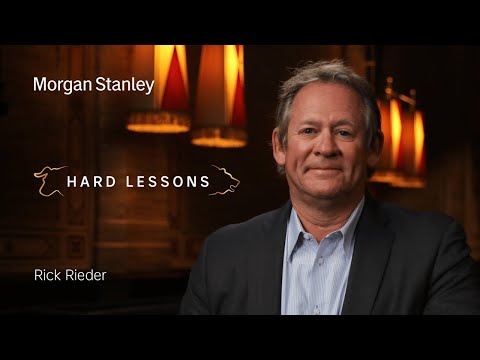
The EV call: being the only dope in the room
▶ 4m 17sRieder describes his early conviction on electric vehicles, which he saw as an energy business rather than an auto business. He built the thesis through personal product testing — driving an EV, using new technology firsthand — before anyone else took it seriously. He was often the lone voice in the room. His framework: identify where technology is going, understand the economics, then have conviction when the world says you're wrong.
"I remember sitting in rooms, and I was the only dope in the room."
Markets as a gambling institution — and when contrarianism pays
▶ 2m 2sRieder argues markets have become more herd-like, with social media intensifying the tendency for everyone to pile onto one side simultaneously. When everyone moves together and prices have already moved, the contrarian fade has been a consistently good trade. But he's honest about the psychological difficulty: you can be right about the long-term thesis and still lose money because the market stays wrong longer than you can stay solvent.
Peloton: what holding too long taught him about management quality
▶ 5m 59sRieder was an original Peloton investor and watched it explode during Covid, but he held well past the peak. His post-mortem: the real lesson wasn't about timing — it was about management quality. Companies must pivot as technology and industry evolve; some CEOs know the numbers, understand the business, and can adapt; others chase trends and fall behind. He now prioritizes time with CEOs and leadership teams before any major investment.
"The one thing that I learned is the person running your company is a huge deal — companies evolve, the industry evolves, technology evolves, and you've got to pivot."
Starting a hedge fund into the financial crisis — leverage and survival
▶ 1m 12sRieder launched a hedge fund just before the 2008 crisis, thinking volatility was creating opportunity. When everything correlated to the downside simultaneously, the leverage on the book proved dangerous. He describes the psychological weight of those days — walking into the office each morning trying to pump himself up. The lasting lesson: always think through what an extreme unexpected tail event would do to your portfolio, especially the leverage.
Know your exit before you enter — the escape hatch principle
▶ 2m 22sHis core risk rule: before putting on any position or building any portfolio, know what your exit strategy is. Not as an act of pessimism — he genuinely likes stress and is in the business of taking risk — but because thinking through the exit in advance means you execute plan B calmly rather than reactively. Markets move down five times faster than they go up; by the time it feels urgent, you're already late.
"If you know what your exit strategy is, you know what your escape hatch is. It helps you in terms of planning and thinking through."