
Peter Lynch
One of the most celebrated portfolio managers in investment history, running Fidelity's Magellan Fund from 1977 to 1990 and delivering a 29.2% average annual return — more than doubling the S&P 500's performance and turning a $18 million fund into $14 billion. Lynch's investment philosophy is grounded in the principle that individual investors have a genuine edge over Wall Street by observing the products, services, and businesses they interact with every day — a concept he popularized as 'invest in what you know.' He categorized stocks into six types (slow growers, stalwarts, fast growers, cyclicals, asset plays, and turnarounds) and developed a rigorous but accessible framework for evaluating each, with earnings growth trajectory and PEG ratio as core analytical tools. Author of the bestselling 'One Up on Wall Street' and 'Beating the Street,' Lynch's writing remains some of the most practical and readable guidance in fundamental stock analysis and long-term investing. His emphasis on independent thinking, business quality, and patient conviction continues to influence value and growth investors across generations.
Videos
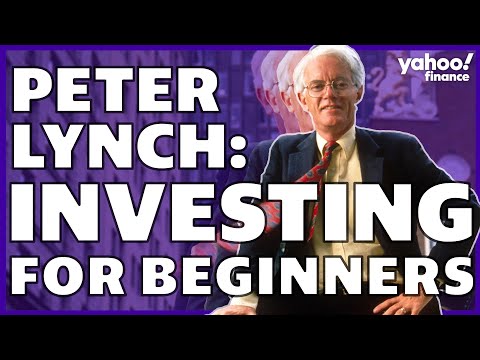
Peter Lynch — How to Invest in the Stock Market for Beginners
2022-09-05 · 8 bites

How Peter Lynch Became the Greatest Fund Manager of All Time (TCAF 211)
2025-10-03 · 14 bites
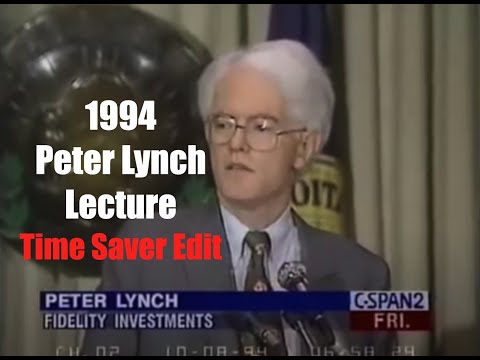
Peter Lynch — 1994 Lecture on Stock Picking (Investor Talk)
1994-01-01 · 11 bites
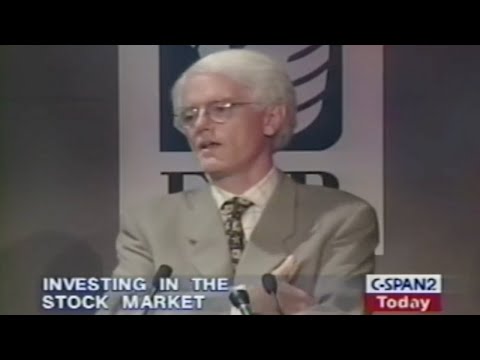
Peter Lynch — Investing Principles (Investor Archive)
2020-12-02 · 12 bites
The 10 most dangerous things people say about stocks — phrases about falling prices
▶ 4m 41sLynch opens with what he calls the 10 most dangerous things people say about stocks. The first five all involve anchoring on price. Polaroid fell from 140 to 18 because people kept saying it couldn't go lower. Philip Morris was a 100-bagger after already rising 5x, but people sold saying 'how much higher can this go.' 'Eventually they always come back' — not always true. 'It's three dollars, how much can I lose' — whoever puts the most in at three loses the most. And 'it's always darkest before the dawn' — in the oil patch, the rig count fell from 11,000 to under 1,000 over eight years. The correct version: it's always darkest before pitch black.
"It's always darkest before the dawn. The right expression in Texas is: it's always darkest before pitch black."
"Conservative stocks," stocks you didn't own, and why whisper stocks are no-shots
▶ 3m 41sLynch continues the dangerous phrases: 'I own conservative stocks' — Eastman Kodak and IBM each fell 75%. 'Look at all the money I've lost not buying it' — in 13 years at Magellan he catalogued 200 stocks from A through L that went up tenfold that he didn't own; you cannot lose money in a stock you don't own. 'Stock has gone up, I must be right' — buying more at 13 after buying at 10 is dangerous if you still don't understand the company. He closes with whisper stocks: no sales, no product, sensational story. He tried 30 and never broke even. These aren't long shots — they're no shots.
"You cannot lose money in a stock you don't own. The only way to lose money is buy stock, have it go down, and sell it. That's the only way."
Management is the most important thing — and the hardest to measure; institutional biases hurt you
▶ 4m 6sLynch calls management the single most important factor in a company but says it's nearly impossible to evaluate from the outside — you get one hour, maybe half an hour. His solution: buy the story, not the manager. Find a formula any fool can run, because eventually one will. He bought Toys R Us and Circuit City knowing the formula was bulletproof regardless of who ran it. He then attacks institutional biases: buy lists only include companies with unit growth rates above a threshold, excluding financials, savings and loans, or anything that doesn't fit the template. Great stocks are everywhere — don't cut yourself off.
"I like to invest in a company any fool can run — because eventually one will. Buy the story. Assume management leaves the next day. If the story is still good, you're fine."
The only math you need — fifth-grade arithmetic and the balance sheet check
▶ 3m 2sLynch rejects the idea that investing requires complex math, dismissing cosines, calculus, and the 'area under the curve' as completely irrelevant. The math that actually matters is a quick balance sheet read: $400 million in debt, no equity, no cash, losing money — forget it. $300 million in cash, no debt, $200 million in net worth, losing $10 million a quarter — they'll survive. He tells the 'does x always equal seven' story to illustrate that this kind of simplicity is exactly right for the stock market.
"$400 million in debt, no equity, no cash, losing money — forget it. $300 million in cash, no debt — they'll be around. That's all the math you need."
There's always something to worry about — and it has never stopped the market
▶ 4m 30sLynch surveys 50 years of rotating macro fears that all turned out to be wrong. In the 1950s, people built fallout shelters and feared a second Great Depression — yet the 50s were one of the best decades for stocks ever. Oil went from $4 to $40, experts predicted $100, then it came back to $14. LDC debt was going to bankrupt all the banks. Japan's Nikkei fell from 40,000 to 16,000 and everyone prayed for Japan. The pattern: one new catastrophe after another, and the market has survived every one.
"There's always something to worry about. The 1950s were the best decade for stocks this century. People were building fallout shelters — and somehow that didn't stop the market."
Why younger investors have the edge — and why the market is always higher eventually
▶ 4m 9sLynch argues younger investors outperform because they aren't weighed down by decades of crisis memories — an 8-year-old hasn't heard of the yield curve. The stock market has fallen more than 10% exactly 53 times in 96 years, with 15 of those exceeding 25%, and has recovered every time. Lynch says he has no idea what the market does next year but guarantees it will be much higher in 15 and 25 years. He includes his 1987 crash story: he was golfing in Ireland, heard the market was down 508 points on Monday, and flew home immediately.
"I will guarantee you the market will be a lot higher in 15 years, a lot higher in 25 years. What it's going to do next one or two years — I don't have any idea."
Q&A: international stocks, when to sell, and great stocks in your own backyard
▶ 3m 17sLynch answers audience questions. On international stocks: less analyst coverage means more mispriced opportunities — look at 10 companies and find 1 mispriced; look at 100 and find 10. On when to sell: sell for exactly the reason you bought. He tells the Subaru story — bought at 80 (up from 6), sold when Hyundai entered and the car was no longer uniquely positioned. He urges investors to focus on industries they already know: he was in the investment business and missed Dreyfus, which went up 50-fold. The best edge is proximity.
"When do you sell? Exactly when the reason you bought changes. I bought Subaru — when the car was no longer unique, the stock was no longer a buy."
Concentration beats diversification — and the thrift conversion opportunity
▶ 4m 41sLynch says he doesn't believe in diversification. He'd own one stock if one was truly great. When 10 stories are equally attractive, buy all 10 and watch them unfold like stud poker — then load up on the ones where the story keeps improving and the stock goes down. He argues that depositors who throw thrift-conversion prospectuses in the trash are missing the easiest money available: they're used to getting a calendar and a toaster, not 75 pages of black ink. He closes with the bank consolidation thesis: the US has 7,500 deposit takers; the UK has 7, Canada has 8 — this industry will shrink dramatically.
"I don't believe in diversification at all. I would own one stock if I could find one great stock. But if 10 stories are equally attractive, I buy all 10 and watch them unfold."
Why Lynch left Magellan at 46 — family over the fund
▶ 4mLynch explains his 1990 departure at the peak of his career. His father died at 46 and Lynch was 46 — he noticed he was in the office every Saturday while his daughters grew up. Fidelity offered him a role working with young analysts, which he accepted. He received multiple offers to run a closed-end fund; the market's 30-fold rise since he left would have made it enormous, but the temptation was never great enough.
"My father died at 46 and I was 46. I remember that number. I just wanted to spend more time with my wife and the third daughter."
Heroes, the caddy yard, and how Lynch learned to trust stocks
▶ 4mLynch names the entrepreneurs he most admired: Lee Iacocca for the Mustang, minivan and Jeep; Bob Walter who built Cardinal Health from a $37 million IPO to $37 billion; Ben Cammarata of TJ Maxx. He traces his confidence in stocks to caddying as a teenager: he heard wealthy golfers talk about their picks, looked them up, and watched them go higher. He credits caddying and a lucky break getting the Fidelity internship as the foundation of his career.
"People would talk about what stocks they're buying. I'd look it up and a few months later they were higher. Pretty good deal, you know."
"Know what you own" — Lynch's most important rule and the play-the-market trap
▶ 4m 57sThe host launches a famous-quotes session, and Lynch immediately jumps to his real priority: know what you own. If you can't explain why you own a stock, you'll panic when it drops. He recalls Lily Tomlin calling him unable to sleep — she owned five companies but had no idea what any of them did. He dismantles the phrase 'play the market' as a dangerous verb, and explains that edges only work when rooted in genuine understanding of the underlying business.
"Know what you own. That's the most important lesson. Because you'll get shaken out if the stock goes from 10 to 8 and you don't know what they're doing."
Write the story down — and why more money is lost preparing for crashes than in crashes
▶ 3m 3sLynch instructs investors to write a thesis before buying: why is this stock going to work, why is it undervalued? He describes giving paper-portfolio exercises to students — pick 10 stocks, list your reasons, watch for a year. He then pivots to a counter-intuitive claim: far more money has been lost by investors preparing for corrections than in the corrections themselves. Today's information access makes the research step easier than ever.
"Write the story down. Why is the stock going to work or why is it undervalued? Pick 10 stocks and watch them over a year or two. List the reasons and see what happens."
Accept periodic losses and ignore the macro — Lynch's two foundational disciplines
▶ 4m 20sLynch pairs two rules: you won't do well in markets unless you accept that declines are normal, and you should spend no more than 13 minutes on macro forecasting — 10 of which are wasted. He never employed an economist at Magellan; instead he tracked ground-level facts: credit card debt, savings rates, used car prices. The Chrysler example illustrates the method: everyone feared bankruptcy, but he read the balance sheet, saw $2 billion in cash, and bought the turn.
"If you spend more than 13 minutes analyzing economic and market forecasts, you've wasted 10 minutes."
Invest in what you know — Hanes pantyhose, Taco Bell, and the individual investor's real edge
▶ 4m 57sLynch clarifies what invest-in-what-you-know actually means: proximity gives you an insight advantage before Wall Street notices. His wife spotted L'eggs pantyhose sold at supermarkets instead of department stores — a distribution edge Fidelity hadn't seen. Lynch personally bought 65 pairs of a competing brand to test quality. His first Magellan pick was Taco Bell at 14; it was on its way to 500 before Pepsi bought it. People in an industry always know it's improving before he does.
"My largest position was in Hanes — pantyhose called L'eggs. My wife went to the supermarket with me. This was an incredible success."
Apple from crappy to terrific — and the day Warren Buffett called
▶ 3m 2sLynch traces his Apple thesis from the iPod: the PC business had terrible margins, but the iPod made $150 profit on a $200 device and financed the iPhone. He articulates his framework for dynamic companies: crappy to semi-crappy to better to terrific. The segment closes with the story of Buffett calling Lynch's home to ask permission to use the 'cutting the flowers and watering the weeds' quote in his annual report.
"Selling your winners and holding your losers is like cutting the flowers and watering the weeds."
The business doesn't change — Lynch on what he still believes and AI versus the 2000 bubble
▶ 3m 37sAsked if he has changed his mind about anything, Lynch says his core principles are unchanged: Amazon, Costco, Walmart — all identified through public information, all going from crappy to terrific. On AI stocks, he owns none and admits he couldn't pronounce Nvidia until eight months ago. On whether AI resembles 1999, he gives an honest answer: no idea. He notes the same bottom-up logic applies regardless of the market narrative.
"The same thing I thought. The success of Amazon. Costco, Walmart. That's what's done well — just using public information."
Unglamorous beats obvious — Waste Management and the oxymorons of Wall Street
▶ 3m 49sLynch describes his best investments as companies nobody wanted to own: Waste Management (garbage stocks with mafia rumors) and turnarounds where a company goes from losing $6 per share to losing $2 to making $2 — the same $4 swing drives a quadruple. He calls out the oxymorons of Wall Street: the assumption that professionals always outperform individuals. The edge lies in looking where others aren't looking, not where the crowd is concentrated.
"Stocks are mispriced when there's a lot of ignoring. I don't think people were looking at Waste Management. They just wouldn't look at it."
The new low list — Lynch on value investing, the Magnificent Seven, and Fidelity's trading constraints
▶ 3m 15sLynch prefers the new low list over the new high list: that's where mispriced stocks hide. He acknowledges the Magnificent Seven are genuinely great companies — Meta is incredible, Amazon is staggering — but he personally can't buy them. Every Fidelity employee must clear trades against the firm's own positions, and Fidelity is always active in those names. He holds Fidelity index funds for that exposure instead.
"I look at the stocks on the new low list. Most of them are crap. It's that style of investing that's fallen out of favor in recent years."
Costco at 55x and Walmart's 80-fold run — on patience and today's market valuations
▶ 3mLynch acknowledges elevated valuations — S&P at 22x trailing earnings, Costco at 55x, Walmart at 70x — but uses Walmart as the patience lesson. Ten years after going public it was already up 10x; Lynch missed it. It then went up 80-fold more because it was still only in 18% of the United States. McDonald's repeated the pattern internationally. The message: a stock that has already risen 10x isn't necessarily done. You don't have to be in the first inning.
"The stock was up 10fold. I missed it. It's now up 80fold since then. You don't have to be in the first inning."
Quarterly reporting, the meme stock generation, and the Great Depression revisited
▶ 3m 4sLynch sees some merit in longer reporting periods but hasn't decided on semi-annual. On meme stocks, he finds a silver lining: 25 to 30 million new investors under 30. He then reframes the Depression's severity: only 1% of Americans owned stocks in 1929, there was no SEC, no Social Security, no unemployment insurance, and the Federal Reserve was asleep. The conditions that made 1929 catastrophic have since been systematically dismantled.
"The market bottom in '82 was 777. Not 7,000. 777. We've had an incredible bull market since then — and we've never had a big one."
Eleven recessions and still standing — Lynch's case for long-term American optimism
▶ 2m 56sLynch counts the buffers that didn't exist in 1929: Social Security, unemployment insurance, the SEC, the GI Bill, 63% home ownership, IRA accounts. Eleven recessions since, none worse than 5-6% GDP decline. He closes with a direct message for self-directed investors: you're now responsible for your own retirement in a way prior generations weren't — and a company 401k match is a 100% return on day one.
"We've had some incredibly bad presidents, some bad congresses, we've had bad economists, and we've made it through. It's a pretty good system."
America creates, China duplicates, Europe legislates — Lynch's rebuttal to the AI jobs fear
▶ 5m 32sLynch addresses the fear that AI will eliminate jobs with the AT&T breakup story: in 1984 one in 100 Americans worked there; the telecom industry now has 400,000 employees instead of 1 million, yet total US employment grew from 100 million to 153 million. Automation has always been a net positive. He argues automation will have a bigger near-term impact than AI, and closes with his defining line on American exceptionalism and a recommendation to read The Shoe Dog.
"America creates, China duplicates, and Europe legislates."
Average people can win in stocks
▶ 4m 17sLynch opens by calling it a tragedy that the media has convinced small investors they cannot compete with institutions. The opposite is true: individuals have natural advantages — they can buy what they understand, they are not forced to own 200 stocks, and they face no committee or career risk. Institutions push stocks to absurd lows and highs; individuals can exploit that. The key: if you cannot explain in two minutes why you own a stock, you should not own it. Buying what you do not understand is the fastest route to poor results.
"If you can't explain in two minutes why you own a stock, you shouldn't own it."
Simple math, don't predict, study history
▶ 4m 23sThe math behind stock picking is straightforward: earnings drive stock prices over time. What is not worth doing is predicting the market, interest rates, or the economy — no one can do it consistently, and the attempt distracts from the actual work of finding good companies. What is worth doing: studying history. Understanding how industries cycle, what happened in prior recessions, and how markets have behaved before gives you the context to stay rational when others panic. "If you're not ready for the market to go down sometime, you shouldn't own stocks."
"If you're not ready for the market to go down sometime, you shouldn't own stocks."
Don't rush — find your edge
▶ 4m 41sYou do not need to act immediately on an idea. A stock you like today will probably still be a good buy six months from now. The key question: what is your edge? What do you know that the market does not? Your edge can come from your profession, your shopping habits, your industry knowledge — the companies you interact with every day. Lynch illustrates with his famous "buy what you know" framework: millions of people saw L'eggs pantyhose displays before Wall Street caught on. The information was hiding in plain sight.
"You need an edge to make money in stocks. Your edge can come from your profession, your shopping habits, your industry knowledge — the companies you interact with every day."
Declining prices, panic selling, and penny stocks
▶ 5m 29sA declining stock price does not mean the company is declining — the price is not the business. Yet people routinely panic-sell at exactly the wrong moment because they confuse price action with fundamental deterioration. Penny stocks are especially dangerous: the risk of total loss is dramatically higher, and the promotional machinery around them is designed to separate amateurs from their money. Lynch also warns against getting emotionally attached to a stock — the stock does not know you own it, and it will not reciprocate your loyalty. Avoid long-shots: the math of long odds means you are almost certain to lose.
"The stock doesn't know you own it. It won't reciprocate your loyalty."
There is always something to worry about
▶ 3m 29sIn every decade Lynch can remember, there was always a reason not to invest: recessions, wars, oil shocks, inflation, political crises. If you waited for the all-clear signal, you never bought. The investors who made money understood that scary headlines are permanent background noise, not actionable sell signals. "Use your stomach, not your brain" — the real test of an investor is not intellectual analysis but emotional endurance. Can you hold through the scary periods? That question, more than stock-picking skill, determines long-term results.
"In every decade, there was always a reason not to invest. If you waited for the all-clear signal, you never bought."
Congress, the press, and what actually matters
▶ 4m 10sLynch does not pay attention to Congress when making investment decisions — the connection between legislation and individual stock outcomes is too indirect and too slow. Financial reporting in the press is similarly unhelpful for stock selection: by the time a trend makes the cover of a magazine, it is usually priced in. The press explains what already happened; investing requires anticipating what will happen. Focus on facts — earnings, sales, inventories — not the daily narrative. The noise-to-signal ratio in financial media is extraordinarily high, and filtering it out is a core investing skill.
"By the time a trend makes the cover of a magazine, it's usually priced in. The press explains what already happened; investing requires anticipating what will happen."
Why Lynch loves volatility — and the $4 billion loss story
▶ 4m 54sVolatility is not risk — it is opportunity. Lynch explains why market swings are the small investor's friend: they create entry points at prices that would never be available in a calm market. He illustrates with his own experience: Magellan Fund once lost $4 billion in a single quarter. His shareholders called asking "what's Lynch doing?" — but he did not panic-sell into the decline. The market recovered, and the fund went on to new highs. The lesson: you must be emotionally prepared for your stocks to decline, sometimes sharply. If you cannot handle a 20% drawdown without selling, you should not be in equities.
"If you can't handle a 20% drawdown without selling, you shouldn't be in equities. Markets go down — that's what they do."
Where to put $1,000 a year for the long term
▶ 3m 5sLynch fields the most practical question: if you have $1,000 a year to invest for the long term, where should it go? His answer: an equity mutual fund, consistently dollar-cost averaged, and never sold. "Everybody in the world is a long-term investor until the market goes down." The key is to add during declines, not sell into them. The biggest mistake individual investors make is selling at the bottom and missing the recovery. Lynch jokes that he cannot predict the market — he flips a coin — but over 20 to 30 years, equities have always been the best-performing asset class.
"Everybody in the world is a long-term investor until the market goes down. The key is to add during declines, not sell into them."
Market favorites and the power of American business
▶ 7m 28sLynch walks through the sectors he likes: industries with long-term secular tailwinds, not cyclical swings. He highlights the extraordinary resilience of American business — 32 years of double-digit earnings growth through recessions, wars, and crises. The banking system is underrated: it is the circulatory system of the economy, and well-run banks compound book value predictably. He dismisses the worry about banks selling mutual funds — it is a non-issue compared to the structural profitability of the sector. The broader theme: the American economy has proven remarkably durable, and betting against it has been a losing strategy.
"The American economy has proven remarkably durable. 32 years of double-digit earnings growth through recessions, wars, and crises. Betting against it has been a losing strategy."
Government, governance, and public resources
▶ 4m 43sLynch argues the government should be wary of micromanaging corporate governance — mandates about board composition and executive pay distract from the real drivers of business performance. What the public actually needs is better access to information: company financials, insider ownership data, and clear explanations of what the numbers mean. He discusses Fannie Mae and Freddie Mac as examples of the complexity created by government-sponsored enterprises. The broader point: investors need tools to make their own informed decisions, not proxies making decisions for them.
Listen to your daughter for stock tips
▶ 2m 41sLynch closes with his most famous story: his daughter's enthusiasm for L'eggs pantyhose from Hanes led him to investigate the company. He discovered a product that was a genuine breakthrough — sold in supermarkets, brilliantly packaged, and flying off the shelves. Hanes became a huge winner for Magellan. The story is not about pantyhose — it is about the principle that consumer behaviour is often the earliest and most reliable leading indicator of a company's prospects. Pay attention to what people are actually buying. The best stock ideas do not come from Wall Street — they come from observing the real world.
"The best stock ideas don't come from Wall Street — they come from observing the real world. My daughter tipped me off to one of the best investments I ever made."
Know what you own
▶ 2m 10sLynch's first and most important rule: you must be able to explain why you own a stock to an 11-year-old in two minutes or less. Most people can't — they only know 'the sucker's going up.' He contrasts incomprehensible tech companies with simple businesses he made money on: Dunkin' Donuts, Stop & Shop, CVS, and Sallie Mae. If you don't know what the company does and why you own it, you can't stay informed when things go wrong.
"The first point is know what you own. I can't believe how many people owned stocks and they couldn't describe to an 11-year-old in two minutes or less why they own this thing."
Don't predict the economy; you have plenty of time
▶ 2m 51sIt's futile to predict the economy, interest rates, and the stock market. Lynch recalls the failed recession predictions from 1982 through 1990 — nobody called them correctly. His rule: if you spend 13 minutes a year on economics, you've wasted 10 minutes. Instead, deal with facts — inventories, copper prices, freight car loadings. And don't feel pressured: you could buy Walmart 10 years after its IPO, when it was only in 15% of the US, and still make 30 times your money.
"If you spend 13 minutes a year on economics, you've wasted 10 minutes."
"It can't go any lower" — the price-anchoring fallacy
▶ 5m 7sJust because a stock has fallen doesn't mean it can't fall further. Polaroid went from 140 to 107 — people bought, then it fell to 18. Kaiser Industries went from 29 to 17 — Lynch bought a huge block, then it fell to 4. The corollary is equally dangerous: 'It can't go any higher.' Philip Morris went up 5x, people sold, then it became a 100-bagger. Home Depot and Toys R Us had the same pattern — investors sold too early because the stock 'had already gone up too much.'
"If it's gone down this much already, you can't go any lower. … Polaroid went from 140 to about 107, people said if you ever get Polaroid under 100 gotta buy it just back up the truck … within nine months the stock was 18."
It's always darkest before pitch black
▶ 3m 17sAnother dangerous idea: 'The business is terrible — you ought to buy the group.' Lynch uses freight car deliveries (96,000 → 45,000 → 25,000 → 7,000), oil rig counts (11,000 → 1,000), and the textile industry to show that terrible industries can stay terrible for decades. His expression for the textile industry: 'It's always darkest before pitch black.' A bad industry doesn't mean a turnaround is coming — it can get considerably worse, to 'terrible to the power of six.'
"It's always darkest before pitch black."
The stock doesn't know you own it
▶ 2m 50sLynch covers three dangerous mental traps: anchoring to your purchase price ('when it gets back to 10 I'll sell'), treating stocks personally like a grandchild or puppy, and the false comfort of 'conservative stocks.' Con Ed fell 80%, then tripled. Gulf States Utilities and Texas banks went to zero — 150-year-old companies are not automatically safe. The stock doesn't know who you are or what you paid — stop treating it like it does.
"The stock doesn't know you own it. Remember that."
Missed gains, copycats, and price-direction bias
▶ 3m 27sThree more dangerous mental habits: (1) Obsessing over stocks you didn't buy and treating missed gains as losses — 'you cannot lose money in a stock you don't own.' (2) Trying to catch 'the next one' — Toys R Us copycats like Child World and Lionel all failed. (3) Assuming a stock going up means you were right, so you double down — the average NYSE stock moves 50% from high to low each year, so a 10→13 move proves nothing.
Avoid long shots
▶ 2m 24sWhisper stocks with sensational stories but no sales are 'no shots,' not long shots. These are companies that promise to cure everything — 'grow hair, make your kid have better spelling, your breasts can improve' — but have zero revenue. Lynch has tried 30 of these and never broken even on a single one. Meanwhile, he made 20–30x his money on boring businesses like Sallie Mae, MBIA, Fannie Mae, and Stop & Shop — stocks he never imagined would soar.
"I have never broken even on a long shot. Never."
Management is hard to judge; stay flexible
▶ 4m 4sManagement is the single most important thing in a company, but it's nearly impossible for an outsider to judge great vs. good management in a one-hour meeting. You don't see the decisions they didn't make. Lynch's approach: buy the business story — assume management leaves tomorrow and the next generation takes over. If the story is solid, management is frosting on the cake. He also urges dropping all biases: great stocks exist everywhere — growth industries, non-growth industries, bankruptcies, new highs, new lows.
"I want the story to be solid. If management can add anything on top of it, that's great. I want to buy the story."
You only need fifth-grade math
▶ 3m 3sYou don't need a computer, calculus, or cosine to invest successfully. If you can add 8 and 8 and get fairly close to 16, you have all the math you need. The key questions are simple: how much debt, how much cash, how much are they losing per quarter? If you made it through fifth-grade math, you can handle stock analysis. Lynch illustrates with a football player who asked 'Does X always equal 7?' and never made it academically — the market doesn't need complex formulas.
"If you can add eight and eight and get fairly close to 16, that's all you need."
There's always something to worry about
▶ 4m 41sEvery decade has its fears that kept people out of stocks. The 1950s: another Great Depression and nuclear war — yet it was one of the best decades for stocks this century. The 1970s: oil went from $4 to $40, experts predicted $100 — within two years it was at $14. The 1980s: LDC debt, money supply panic, Japan taking over the world. The market survived every crisis. There is never a clean, fear-free moment to invest.
"There's always something to worry about."
Think like an eight-year-old
▶ 4m 2sYounger people make better investors because they haven't heard about all the crises. An eight-year-old doesn't know about the money supply, the shape of the yield curve, or how many months into the economic recovery we are — and that's an advantage, because they expect great things from the next 20 years. Lynch shares his personal October 1987 crash story — golfing in Ireland when his $13B fund dropped to $9B in two days — then reveals the numbers: in 96 years, the market had 53 declines of 10%+ (one every two years) and 15 declines of 25%+ (one every six years). Corrections are normal. The market will be a lot higher in 15 and 25 years.
Q&A: When to sell, diversification, and where to look
▶ clipKey answers from the Q&A: Sell a stock when the reason you bought it changes — Lynch sold Subaru at 320 when low-cost competitors arrived. International stocks are worth researching because there's less analyst coverage — 'the person who turns over the most rocks wins the game.' On diversification: he would own one stock if he could find one great one; instead, he buys 10 equally attractive stories and watches them unfold like poker hands, rotating capital as individual stories improve or deteriorate. Today's best hunting ground: secondary stocks among the 3,000 IPOs of the last four years, many of which are ignored after a stumble.
"The person that turns over the most rocks wins the game."