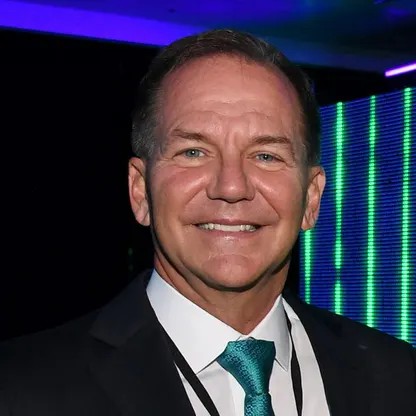
Paul Tudor Jones
Paul Tudor Jones II is one of the most celebrated macro traders in history and founder of Tudor Investment Corp, which he launched in 1980 and built into one of the world’s pre-eminent macro hedge funds over the following four decades. He is best known for predicting and profiting from the 1987 Black Monday crash — the single largest one-day percentage decline in Dow Jones history — having spent months studying its structural parallels to 1929 and positioning short before portfolio insurance unraveled across global markets in a single devastating session. His BBI fund has maintained a negative correlation with the S&P 500 — approximately -0.12 — for more than forty years, meaning every dollar of return has been generated as pure alpha, entirely uncorrelated with broad equity beta. Jones’s framework centers on identifying macro situations that are undervalued, underowned, and dormant — a mispriced currency, a rate market where policy has strayed too far, a commodity that drifted quietly away from fair value — and then waiting for the catalytic moment that forces the market to reprice. He coined the phrase “losers average losers,” a categorical rejection of adding to losing positions, and was one of the first major institutional investors to publicly embrace Bitcoin as an inflation hedge, announcing a meaningful allocation in 2020 as central bank and Treasury interventions created what he identified as a once-in-a-generation inflation setup. Beyond trading, Jones founded the Robin Hood Foundation in 1988 — the day after the ‘87 crash, when he believed a depression was coming — which has since distributed over four billion dollars fighting poverty in New York City and helped pioneer the application of rigorous business metrics to philanthropic giving. A recurring theme across his career is that great traders are, above all, great risk managers: the ability to cut losses without hesitation, preserve liquidity at all costs, and remain psychologically stable under maximum duress is what separates careers that endure for decades from those that end in a single spectacular blowup.
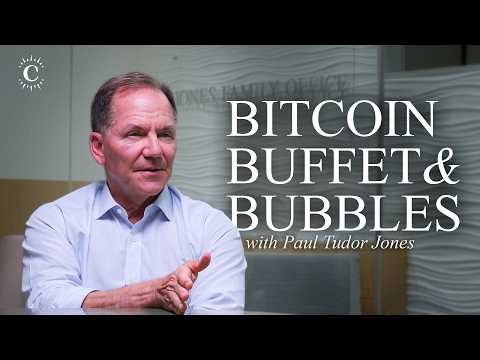
A Stranger's Kindness and 4,000 Prayers
▶ 4m 2sPTJ insists on opening with the podcast's signature closing question: what is the kindest thing anyone has ever done for you? His answer is his earliest memory — age two or three, separated from his mother at the Curb Market in Memphis, an elderly Black gentleman took his hand and walked the aisles until they found her. When his mother tried to give the man $5 — a huge sum in 1957 — he refused: "I know you'd do that for my child, too." That night PTJ added "that man" to his nightly prayer list and, never having learned his name, prayed for him every night for the next ten to twelve years — roughly four to five thousand repetitions. The act itself was simple: a stranger holding a lost child's hand for a few minutes. Its effect compounded across decades.
"I know you'd do that for my child, too."
The Photo Negative: From 60 Minutes to Bed-Stuy
▶ 3m 30sFast forward to 1986. PTJ, 32 years old, is lying on his couch watching 60 Minutes when Harry Reasoner interviews Eugene Lang — a businessman who returned to his old Harlem elementary school and, shocked to learn almost no students would go to college, promised on the spot to put every graduating student through. PTJ recognized the photo negative of his own childhood: a Black man had once helped him as a small white boy; now he would help Black children. He called Lang the next day. Lang had already heard from others — they met at his apartment that Tuesday night. PTJ expected Harlem or the Lower East Side; he was assigned Bed-Stuy, then the highest-crime neighborhood in New York City. That began a fourteen-year journey — going over every Tuesday, adopting successive classes, running after-school programs and sports. But passion alone was not enough: about three years in, the kids weren't doing well. He hired tutors. Four years in, one student was killed and several girls became teenage mothers — the challenge was not just academic but social, and learning what it actually takes to beat poverty required failing first.
"I can do that."
From Failure to #1: The Science of Fighting Poverty
▶ 3m 55sThe Bed-Stuy failures informed everything PTJ built afterward. When he started the Robin Hood Foundation the year after the 1987 crash, he applied business principles: identify what is actually efficacious, hire the best people, set goals and standards, measure everything, iterate on failure. Those lessons also led him to start one of New York's first charter schools in the late 1990s in Bed-Stuy — right next to the original spot. He named it Excellence deliberately: "I wanted these boys to know that we were going to demand excellence of them." With a dream team of educators and a rigorous pedagogy, within four to five years the school became number one out of 543 elementary schools in New York City. The lesson: one simple act of kindness can have waves of betterment that are multiplicative and transformative in ways that cannot be planned. The elderly man who helped a toddler in 1957 could not have known that four thousand prayers later, his act would lead to a charter school that topped an entire city — and counting.
"You can have all the passion in the world, but you have to have a plan."
The Silver Crash and the Trader's Creed
▶ 3m 55sAfter a brief detour through PTJ's memorable commencement speech — pulling out a bow and arrow and smashing an apple with the line "aim high and shoot straight" — Patrick moves to the core question: the difference between an investor and a trader. PTJ begins in 1976 on the commodity floor during raging inflation. Bunker Hunt was squeezing silver, accumulating 200 million ounces at roughly $3 an ounce. Between 1976 and 1980, silver went through the roof, reaching $50. At the peak, Hunt was worth approximately $11 billion — five to six times the next richest person on earth. Then COMEX, overwhelmed by commercial hedgers being destroyed on margin calls, declared liquidation-only. Silver collapsed from $50 to under $10 in about eight weeks. The richest man on earth was virtually bankrupt in six to seven weeks. Right then, PTJ decided he would never own anything for the long term or trust anything for the rest of his life. This was reinforced by his grandfather's aphorism: "Son, you're only worth what you can write a check for tomorrow." Two beliefs — liquidity as survival, the fleeting nature of any position — were seared into him at 24.
"Son, you're only worth what you can write a check for tomorrow."
Riding the Trend: Why the Longest Hold Wins
▶ 4mThe volatility of PTJ's early career made long-term ownership feel laughable. He'd run a $10,000 account to $100,000 and back to zero. A friend — nicknamed "the Mortician" — could take $5,000 to $2 million and then into deficit. Liquidity was survival. Yet every semester since 1982, PTJ guest-lectured at a Virginia investment class, and his number-one lesson was the opposite of his own practice: "You're going to make your money by riding a trend for the very, very longest time." He'd ask who the richest person in the world was — it was always Gates or Buffett — and point out they both got there by holding one thing for decades. Gates owned a company. Buffett owned America. The method differs; the principle is the same. The greatest fortunes are not made by brilliant entry and exit timing but by identifying a trend large enough and durable enough to compound across an entire career. PTJ taught this to students for decades even as he himself generated 100% alpha with near-zero market correlation — living proof that knowing the right answer and being able to execute it are completely different things.
"The greatest fortunes in the world were made by riding a trend for the long run."
The Buffett Apology
▶ 3m 55sFor decades PTJ publicly mocked Warren Buffett: right place, right time, bull market genius. If Buffett had started in Japan in 1989, forget it — he'd have been wiped out. PTJ's BBI fund has generated a −0.12 correlation with the S&P 500 for forty years, producing 100% alpha. Yet he freely admits he envies Buffett's belief system — the patient faith in America that allows Buffett to sit through a 50% drawdown without flinching. PTJ knows he doesn't have that calm: he's been a right guard in the NFL for fifty years, fighting in the trenches every day, while Buffett is the franchise quarterback who just needs to believe. Then he heard the Acquired podcast on Berkshire Hathaway and learned that Buffett understood compound interest at age nine — nine years old. PTJ apologizes on air: "You are the OG of compound interest and I wish I was one-tenth as smart as you are." He now sees that Buffett's genius was not being in the right place at the right time — it was seeing the structural truth of compounding as a child and spending a lifetime never stopping. Charlie Munger added the critical complement: growth companies that themselves compound, not just cheap companies trading below intrinsic value.
"You are the OG of compound interest."
AI as the Greatest Unmanaged Risk of Our Time
▶ 5m 15sAnyone who has truly succeeded at investing is, first and foremost, a great risk manager. Eighteen months ago PTJ attended a private conference of roughly 35 people, including one senior modeler from each of the four largest AI companies. He asked them directly: how does AI safety get resolved? The near-unanimous answer: "I think we'll finally do something about it when 50 or 100 million people die in an accident." The build-break-iterate model has driven all human innovation — but it presupposes the break is survivable. AI introduces a tail event that could kill hundreds of millions. Two structural problems: there is no public vote on the pace of deployment, and three years in there is still no regulatory framework — compared to the Atomic Energy Commission created eighteen months after Hiroshima. PTJ's proposed solution: make all AI output mandatorily watermarked, and treat repeated knowing violations as a felony. He wants to be able to distinguish what is authentically human from what is not — deep fakes have already fooled serious people he knows twice this year. He also flags concern about AI-human integration: a significant portion of the scientists at that conference believe a chip-in-brain blended human-machine entity is both acceptable and inevitable. PTJ would vote no — and suspects most humans would too, if anyone ever asked them.
"I think we'll finally do something about it when 50 or 100 million people die in an accident."
Eli Tullis: Emotional Stability Under Catastrophic Loss
▶ 4m 30sPTJ's mentor Eli Tullis focused almost entirely on cotton, sitting motionless and waiting for the exact moment of maximum fear or maximum greed. His skill was recognizing that moment by instinct — not analysis — and acting decisively when everyone else was paralyzed. One weekend a spectacular drought ended; rain poured through the cotton belt. By Monday open, their position was limit-down and Tullis had taken a massive loss. That same day at lunch, Tullis's wife brought four friends and he charmed them all with a huge smile, completely unbothered. PTJ sat in stunned silence: "This guy just broke and he's acting like Rock Hudson." The lesson: when the going gets tough, the tough get going. Wear it in your chest, not your face. The confidence that you will come back — genuinely believing it, not performing it — is the psychological foundation that makes a comeback possible. Trading is an endurance sport where the most important muscle is the one that keeps your face steady while your gut is churning. Tullis wasn't denying the loss; he was denying it permission to define his afternoon, his relationships, or his sense of self.
Boxing, Big Shots, and Catalytic Moments
▶ 4m 20sTrading is like boxing: you're in the ring with an opponent — the market — and mostly you're jabbing, probing, feeling each other out, looking for an opening. Then every now and then a great opening appears and you take a big shot. Bitcoin 2020: knockout. Two-year rates 2022: knockout. Most of the time in the interim is spent gathering information and preserving capital. Every major opportunity shares the same anatomy: something meaningfully mispriced and underowned, waiting for a catalytic moment that forces the market to reprice. Current example: dollar-yen. The yen has been grossly undervalued for two years. Japan's new prime minister has the characteristics of a Reagan or Thatcher — Japan-first, entrepreneurial, determined to remake the economy. Japan holds $4.5 trillion in net international investments, most in unhedged US assets. The valuation case existed for years; the catalyst is the new leader. Two-year rates in 2022: PTJ read that Powell was overstaying easy policy to ensure Biden would reappoint him. The day Biden reappointed Powell, it was go time. Bitcoin 2020: unprecedented fiscal and monetary stimulus made inflation trades inevitable; Bitcoin — finite supply, decentralized — was the best expression. Risk to that thesis: cyber warfare (anything electronic goes down) and quantum computing (any encryption can be broken).
"Every now and then you'll have a great opening and you take a big shot."
Bubbles, Leverage, and the Overpriced Market
▶ 5m 40sEvery major crash traces back to too much leverage, almost always in derivatives. The 1987 crash was 100% portfolio insurance — with position limits it would have been 10 to 15% maximum. LTCM in 1998 was derivatives again. The 2000 bear market was the easiest PTJ ever saw: the IPO cascade of 1999–2000 continued as lockups unlocked in a never-ending supply of new sellers — a structure with clear echoes of today. Contemplated IPOs in the next year represent approximately 5 to 6% of market cap while buybacks — which have retired roughly 2% of float annually for the past decade — will slow as hyperscalers commit capital to AI capex. Tech has and will continue to underperform as existing holdings fund the IPO wave. Stock market cap-to-GDP: 65% in 1929, 170% in 2000, now 252%. A 30 to 35% mean reversion — roughly the historical pattern every ten years — applied to 252% of GDP produces an 80 to 90% of GDP wealth effect destruction: capital gains tax revenues go to zero, budget deficits explode, bonds get crushed. Buying the S&P at a PE of approximately 22 has historically produced negative 10-year returns. Private equity now represents 16% of institutional portfolios versus 7% in 2007–2008, adding hidden illiquidity risk across the system.
"We're clearly in a sovereign debt bubble."
A Day in the Life: 50 Years of Discipline
▶ 4m 40sPTJ's daily routine: wake at 6:15, work until 7, forty-five minutes of hard cardio, screens at the open. No meetings until 10. Meetings from 10 to 12, lunch, one afternoon meeting, then crucially: one hour before the close and one hour after to plan the next day and think through what Tokyo and Hong Kong will do overnight. Home around 5, walk with his wife for an hour, work for an hour, dinner, mindless Netflix, then work again from 9:30 to 10:15. Then he wakes at 2:30 or 3:00 AM to watch the London open for thirty to forty-five minutes and do analytical work in the quiet. Back to sleep, up at 6:15. He has done this since the 1980s. But he works much harder now than forty years ago because of information overload — 800,000 emails versus the pit's singular focus on the day's high and low. In the pits, all he needed was to focus on whether prices were approaching maximum fear or maximum greed. Information overload distracts from "exquisite execution" — buying when there is blood on the ground, selling when there is complete elation. When silver falls 33% in a single day, you must have a plan for the morning before it happens. The thinking must precede the moment; in the heat of the move, it's already too late.
"Information overload distracts me from exquisite execution."
Born or Made: The Trader's Passion
▶ 4m 20sAt a dinner with four or five of his best risk-takers, PTJ raised the question: are great traders born or made? The consensus was unanimous — approximately 70% born. The defining traits: type A personality, extraordinary curiosity and inquisitiveness, and a deep love of competition and games. By age 21 PTJ was obsessed with chess, backgammon, Parcheesi, Monopoly, gin rummy, bridge — the whole business, he says, is just another form of probability theory. He had never taken a formal probability course but understood it intuitively from years of playing. He still plays bridge constantly. A doctor in Palm Beach — 83 years old, still practicing — gave him the prescription for longevity when PTJ moved there: "You retire, you die." PTJ trades partly to keep his mind sharp, partly because his father lived to 100 and he has plans for his 90s. And he trades to make money he can give away: the pursuit of nobility. He wakes up feeling it is a privilege to compete, and hopes he kills it that day so he can give it away. Work is cognitively protective — the 83-year-old doctor, his father at 100, and now PTJ himself all demonstrate that high cognitive engagement extends the years of sharp functioning.
"I want to make an absolute pot of money so I can give it away. I feel like this is the pursuit of nobility."
Robin Hood and the Workless World
▶ 5mRobin Hood was founded the day after the 1987 crash. PTJ had spent months studying the 1929 parallel; when the crash came, he was certain a depression was coming — his worst macro call, but one that launched something more durable than any trade. There were almost no charities focused specifically on fighting poverty, so he started one himself, applying basic business principles: identify what is actually efficacious, hire the best people, measure everything, iterate on failure. The 1990s brought an extraordinary surge of hedge fund participation in giving back — a culture shift he attributes partly to the crash forcing people to find significance beyond wealth accumulation. In the 1980s, everyone wanted association with prestige cultural institutions; after 1987, significance came from helping others. The best part of philanthropy, PTJ says, is the people you meet. Looking forward, the biggest challenge he sees in four to five years is the workless world: AI may replace so much of what people do that work becomes optional, threatening the significance that humans derive from their professional identities. He used to despair about this. He is now cautiously optimistic — athletes find profound meaning in sport, not employment; humans may be adaptable enough to find entirely new sources of significance.
"The best part of philanthropy and charitable giving is the people you meet."
Journalism as Principal Component Analysis
▶ 4mPTJ has maintained for decades that journalism 101 is more valuable than a business school degree and should be mandatory in every college. His father ran a small trade finance paper in Memphis with 2,500 subscribers; PTJ was the copy editor and front page editor, and took journalism classes. What newspaper writing teaches is irreplaceable: the conclusion comes first. Every succeeding paragraph contains the next most important fact, in descending order. The first paragraph answers who, what, where, when, why, and how in two sentences maximum. This structure is a principal component analysis of any event — decomposing complexity into a hierarchy of what matters most, starting at the top. He applies this framework directly to trading: at any moment there are ten important variables, and each one has its day — they rotate in importance. The yen has been undervalued for twenty-four months, but valuation was ignored. The new Japanese prime minister gave it a catalytic moment that pushed valuation from background noise to the number-one actionable factor. "What is the most important thing that is actionable right now?" — that is what trading is. In today's attention economy, clarity is a competitive edge: if you cannot tell your story in fifteen seconds, no one is going to listen.
"If you can't tell your story in 15 seconds, no one's going to listen."
The Principal Components of a Great Life
▶ 3m 40sPatrick asks PTJ to apply principal component analysis to a great life. His answer: God, family, friends, and fun — then service. His significance will not come from being a trader. At the end of his life, he will not be thinking about the 1987 crash or Bitcoin; he will be thinking about who he loved and who loved him. He sometimes thinks about his funeral — the songs he's chosen — and is genuinely excited about it, though he wishes he could be there to enjoy it with his family and friends. Professional achievements are great tools that allow you to do more meaningful things, but the things that count are relationships and deeds, not career milestones. PTJ's faith is real but tested, as he thinks most people's faith is. What faith provides is a code by which to live — a set of principles that bring stability, order, and goodness into daily life regardless of the specific doctrine. He prays every night. He cannot say with 100% certainty he's going to heaven, but the code itself — the structure of living by principles larger than yourself — is what matters.
"I'm not going to be thinking about the 87 crash or Bitcoin. I'm going to be thinking about who I loved and who loved me."
Finding Peak Spring
▶ 2m 20sAt 70, PTJ has developed a new obsession: finding peak spring and peak fall — that specific day in a specific place when color is most vibrant, fragrance most overwhelming. He travels the United States to be in the right place at exactly that moment. He knows when peak spring arrives in Georgia, Tennessee, New York City, and upstate New York (which is typically a week behind the city). The Northeast has the greatest biodiversity — you can see color changes by day, by tree. "If you find that day, you can feel the energy. I've never felt so alive." In those moments, he says, you feel God — the intersection of perfect color, overwhelming fragrance, and the energy of life transitioning. The experience is wondrous whether life is blooming in spring or going dormant in fall — both are so energetic and exciting. After a lifetime of markets, macro, and screens, this is what PTJ now chases: a walk in the right place on the right afternoon before sunset. He recommends everyone find that day in their own neighborhood.
"If you find that day, you can feel the energy. I've never felt so alive."
Kill Them with Kindness
▶ 3m 16sPatrick closes by asking what PTJ would tell ambitious, competitive people searching for their path. PTJ's answer, his mother's phrase: "Kill them with kindness." You're going to wake up some days in a terrible mood — something on TV will make you angry, someone will frustrate you. Particularly now, when everyone seems to want to demonize the opposition, you have to realize it doesn't have to be that way. Devote yourself intentionally to finding the kindness and goodness within yourself and transmitting it to someone else that day. Don't worry about yourself — worry about how you're going to brighten someone else's day. With that attitude, you'll always be happy because your happiness is no longer dependent on what happens to you; it's dependent on what you give to others. And like everything else PTJ believes, it's about the reps: commit to one outward act of kindness every day, and through enough repetitions, "I should" becomes "I am." You become an incredibly kind person — it becomes natural, instinctive, organic. Full circle to the opening: the same act of kindness that defined PTJ's earliest memory at the Curb Market in 1957 is the single principle he returns to most often.
"Kill them with kindness."