
Larry Williams
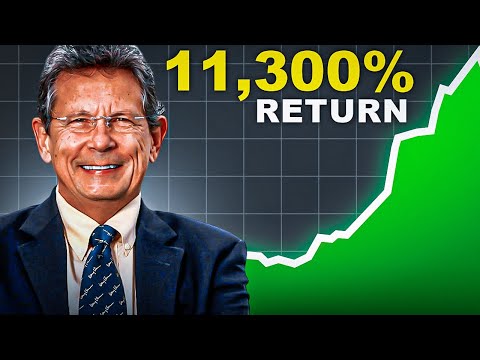
Larry Williams is one of the most celebrated figures in commodity and futures trading, known for winning the 1987 Robbins World Cup Trading Championship by turning $10,000 into over $1.1 million — an 11,300% return in twelve months. His daughter Michelle later won the same competition, validating the principles he taught her. Creator of the Williams %R oscillator and the volatility breakout system, Williams has spent more than 60 years developing and refining methods that combine seasonal patterns, the Commitment of Traders report, and mechanical entry systems into a complete trading framework. Author of more than twelve books including Long-Term Secrets to Short-Term Trading, he has trained thousands of traders on the primacy of position sizing as the single most controllable variable in long-term performance — a contribution that predates and anticipates modern quantitative research on risk-adjusted returns. Williams also competed in more than 70 marathons and has been vocal about the connection between physical health and trading longevity, arguing that a longer career compounds returns in ways no individual trade ever can.
From a newspaper headline to 60 years of markets: Larry Williams's trading origins
▶ 3m 27sWilliams traces his path into trading to a newspaper headline about the 1962 market crash caused by President Kennedy rolling back steel prices — a story that made him ask what it all meant, and never stop asking. With almost no trading literature available in the early 1960s, he educated himself through a handful of books, including Joe Granville's, before meeting Bill, a technically-focused trader in Baltimore who became his first major mentor. Bill taught him the Commitment of Traders report, market squeeze plays, and a framework for reading the long-term direction of markets.
"I'm really into big broad volume markets."
Comparative strength: why within-sector comparisons beat broad relative strength rankings
▶ 4m 3sWilliams explains why he considers comparative strength — comparing related markets like corn against soybeans, or heating oil against crude oil — more actionable than traditional relative strength rankings across all stocks. A market that has held up best during sector declines and rallied hardest within its group is the one to buy; the weakest within the group is the one to sell short. He describes how his market focus evolved from thin, seasonal markets like eggs to deep, liquid futures — Treasury bonds and stock index futures — where his own orders cannot become the market and his stops fill as intended.
"Comparative strength is much more important than relative strength."
The learning path to 11,000%: Bill Meehan and the volatility breakout system
▶ 5m 11sWilliams explains how Bill Meehan — who tutored three traders including Williams — combined a fundamental directional framework with Williams's technical timing to produce a system that worked. Bill taught Williams how to determine where the market was headed over weeks and months; Williams developed the entry mechanism: a volatility breakout system built around the opening price, introduced around 1982. The logic is straightforward: calculate an expected range for the day, bracket a small distance above and below the opening, and enter in whichever direction price breaks. Williams notes the system worked powerfully in pit-session markets but became less effective once electronic trading eliminated the defined opening range, though the concept still applies to stocks and swing trading setups through patterns like the OOPS reversal.
"We just bracket that — a little bit above and below the opening."
What the best bond trader taught him: why great traders are not always mechanical
▶ 3m 20sWilliams reflects on the traders who influenced him most beyond Bill. A legendary blind bond trader named Charlie Francesca demonstrated the power of discipline under adversity. The deeper revelation came from Steve, one of the greatest bond traders Williams had ever encountered: Steve was not a mechanical system trader. This shattered Williams's assumption that all successful traders must follow clean, rule-based systems. Steve had a profound intuitive sense for markets — non-codifiable, non-mechanical, and consistently exceptional. The lesson was uncomfortable but important: mechanical systems do work, and Williams uses several, but they are not the only path to consistent profitability. The best traders are defined by their edge, not by whether that edge is systematic.
"He's not a mechanical trader — that was just a huge lesson."
The market as your best teacher — and how to calibrate indicators to each market's rhythm
▶ 2m 29sWhen asked about recommended trading books, Williams names several authors — Tom DeMark, Jake Bernstein, John Bollinger, Linda Bradford Raschke — but pivots to his most enduring belief: the market itself is the best teacher available. Every losing streak is a curriculum if you listen to it. Rather than blaming conditions when trades fail, he asks what the market is trying to teach him, and argues that this question, honestly pursued, will reveal the answer every time. He also describes his toolbox: 35 custom indicators, with the critical principle being that each must be calibrated to the time frame and natural rhythm of the specific market — a generic 14-day RSI on a market with a 22-day cycle is measuring the wrong thing.
"The market's the best teacher."
The cattle trade that revealed the secret: trend is a function of time, so bet small and catch big
▶ 2m 33sWilliams recounts his worst loss — a cattle trade where he averaged down repeatedly, violating every rule he now teaches. The loss crystallized what he calls the whole secret to making money in markets: trend is a function of time, so the more time you give a trade, the more trend potential you capture. The corollary is to bet small and catch large moves — never put everything on any single trade. A small position catching a big trend makes far more money than a big position trying to scalp a small move, because by the time a large position gets stopped out on a minor adverse move, the loss exceeds what was ever available on the upside. This principle — small size, long runway — is what Bill taught him and what he considers the ultimate money management secret, beyond any formula.
"Bet small and catch large moves."
Position sizing: the single most important decision in every trade
▶ 3m 25sWilliams identifies position sizing as the most critical element of trading — more important than entry timing, exit rules, or system sophistication. He risks between five and ten percent of equity per trade, higher than most professionals because his track record and emotional tolerance support it. His recommended maximum for most traders is four percent. The key insight: position size is not a judgment call determined by conviction — it is calculated from the stop distance. If the stop is far from entry, trade fewer contracts to stay within your risk budget. If the stop is tight, size up. He walks through the arithmetic explicitly: a ten-thousand-dollar stop on a hundred-thousand-dollar account at four percent risk means exactly one contract, with no room for argument or emotional override.
"For most people, four percent should be the maximum."
From cowboy to compounder: how percentage-based position sizing replaced betting everything
▶ 3m 58sWilliams describes the early days of his career when he and other traders were essentially cowboys — betting almost everything on two or three trades, experiencing enormous equity swings in both directions, and receiving margin calls as a daily occurrence. The turning point came through the work of Ralph Vince and others who demonstrated that risking a fixed percentage of equity on every trade was the key to both survival and compounding. Once Williams adopted percentage-based sizing, he has not had a single margin call in over 40 years. He also explains why he places orders at 5:30 PM and deliberately does not watch intraday price action — the more he watches, the more he second-guesses his system and the worse his results become. Stops are set on every trade because he knows every trader, at some point, will freeze and fail to exit when they should.
"I haven't had a margin call in 40 years — it used to be a daily occurrence."
The 1987 World Cup: 11,300% in one year and the 30% risk that made it possible
▶ 2m 28sWilliams recounts the 1987 Robbins World Cup campaign in which he turned $10,000 into over $1.1 million — an 11,300% return over twelve months. The number most people do not discuss is the one that made it possible: he risked approximately 30% of equity on every single trade. This is an order of magnitude beyond what he recommends today, and beyond anything he would attempt again. His daughter Michelle Williams later won the same competition risking ten percent per trade — a result Williams considers equally remarkable because it proves that exceptional returns are achievable at far more conservative risk levels. At one point the account was over two million dollars before a drawdown took it back. The 11,300% story is both a proof of concept and a warning: the same position sizing that drives extraordinary gains can destroy an account if the strategy has any weakness.
"I risked about 30 percent of my equity on every single trade."
Teaching Michelle and the next-trade mindset: why each trade must be independent
▶ 4m 8sWilliams homeschooled his daughter Michelle and built trading into her education, telling her plainly that learning to trade was a skill that could support her financially for life. His core teaching principle: position size should always be a fixed percentage of current equity, and the next trade is all that matters. Once you are in a trade, its outcome is essentially determined — nothing you do emotionally will change it. The traders who fail psychologically are those who carry the weight of prior results into the next decision, sizing up after hot streaks or cutting back after losses based on emotion rather than formula. The discipline to treat each trade as independent, sized purely by current equity percentage, is what separates durable compounders from traders who perpetually give back what they have made.
"The next trade is all that matters."
Live chart walkthrough part 1: using comparative strength to pick the weaker target
▶ 3m 59sWilliams begins a live chart walkthrough by demonstrating comparative strength with two airline stocks — American Airlines and United Airlines. At a point where the sector was rolling over, American Airlines had made a higher high while United had not, making United the weaker stock and the correct short-sale target. Williams explains the principle: in a bearish sector environment, sell the weakest member — the one that could not rally as far — because it is likely to fall the hardest. He extends the concept to futures markets, looking for comparative strength relationships within families like stock index futures to determine which contract offers the best risk-reward for the directional view. The walkthrough shows how he identifies these setups on real charts with price structure alone.
The three-layer framework: seasonal patterns, Commitment of Traders, and mechanical timing
▶ 2m 59sWilliams explains how he structures his weekly preparation around three layers. First, seasonal patterns provide a directional forecast — historical price cycles that indicate when certain markets typically rally or decline, though he stresses these are tendencies, not guarantees, and must be confirmed each year. Second, the Commitment of Traders report shows whether commercial traders are positioned net long or short, giving institutional confirmation to the seasonal bias. Third, he combines time frames: the weekly chart sets the directional framework and the daily chart provides precise entry timing. When all three layers align — seasonal tailwind, commercial positioning confirmation, and a daily chart entry signal — the trade has his highest conviction. He demonstrates on a live chart how the seasonal pattern's red forecast line turned up before price followed.
"Seasonal patterns — I look at them. They often don't follow a seasonal pattern, so you have to be careful."
Live chart walkthrough part 2: from entry signal to trailing stop exit on the daily chart
▶ 6m 31sWilliams continues the live chart demonstration by walking through a complete trade from entry to exit. On the entry side, he looks for simple, repeatable setups: a higher short-term low in an uptrend or lower short-term high in a downtrend, trend line breaks, and the market trading above the recent high with seasonal and commercial support confirmed on the weekly chart. The entry directly determines his initial stop placement, and he uses a mechanical trend-following tool to trail the stop as the position moves in his favor. On the exit side, he uses price targets based on a methodology he learned from a 1960s book by George Seamans, taking profits when the market gets extended rather than waiting for a stop-out. He is candid that his entry techniques are no better than anyone else's — the edge comes from the layered preparation done before the trade is placed.
"My entry helps me with my stop-loss."
Daily preparation, trade journaling, and why health is a trading edge
▶ 3m 30sWilliams describes his end-of-day routine: reviewing trades in a physical notebook — recording what he did right and wrong — placing orders for the next session, then deliberately walking away. He finds that the more he watches intraday price action, the more he second-guesses and the worse he does. Every Saturday morning he reviews weekly charts, seasonality, the Commitment of Traders report, and longer-term fundamentals to set a directional framework for the coming week. On health: Williams ran over 70 marathons, still competes in 5K races and track events, and treats physical fitness as directly connected to longevity in the markets. He cites the Framingham study's finding that lung function is the single strongest predictor of how long you will live, and uses high-intensity interval training to maintain it — reasoning that a longer career means more years of compounding.
"The more I watch it, the more I screw it up."
Advice for new traders: trust but verify, adapt to change, and know if this is for you
▶ 5m 17sAsked what advice he would give new traders, Williams leads with pragmatism: this is not an easy business, despite what the internet would have you believe. Ronald Reagan's maxim — 'trust but verify' — applies especially to trading systems and methodologies promoted online. If trading genuinely isn't suited to you, the sooner you acknowledge it the better; not everyone is cut out for this work, and recognizing it honestly saves enormous pain and capital. For those who are suited: don't look for instant wealth. This is an ongoing educational experience — Williams references an 86-year-old soybean trader who said he was still learning. He addresses market structure change directly: the shift to electronic trading compressed the time frames that used to work and made information instantaneous globally, requiring constant adaptation across a career. Gold, once illegal for Americans to own, is now a market he trades — markets evolve, and traders must evolve with them or be left behind.
"Trust but verify — read all these internet claims, look into them, but don't buy it until you've verified it."
The personality profile of winning traders: low ego, emotional stability, and attention to detail
▶ 4m 3sWilliams recounts a study conducted by his son Jason — a Johns Hopkins-educated psychiatrist who profiled exclusively winning traders, since most research had focused on losers. Three consistent traits emerged: winners were exceptionally good with details, they did not experience significant emotional swings, and they were notably not overconfident. Williams contrasts this with the traders he has known who blew up — uniformly loud, boastful, and certain of their abilities. The lesson is uncomfortable for anyone who associates success with confidence: trading rewards detail-oriented, emotionally even people who respect the uncertainty of every trade. The overconfident trader bets too large, stops listening, and eventually pays for it. He recommends Jason's book 'The Mental Edge in Trading' for those who want to study the psychology of winning traders in depth.
"This is not a business for perfectionists."