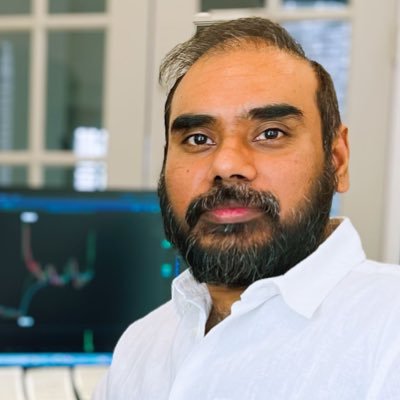
Goverdhan Gajjala
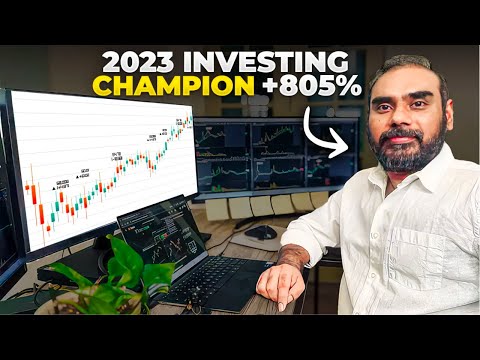
Top performer in the 2023 US Investing Championship with an 85% annual return, achieved through a systematic approach to momentum and small-cap swing trading. His strategy focuses on identifying early-stage breakouts in small-cap stocks with strong relative strength, using volume analysis and strict entry discipline with predefined stop placements to maintain a favorable risk-reward profile on every trade. Gajala places heavy emphasis on trade management — scaling into winning positions while keeping losses small — as the primary driver of long-term compounding. His process is built on thorough daily preparation, consistent scanning for high-quality setups, and maintaining psychological consistency across varying market environments. Gajala represents a new generation of retail-turned-professional traders who have refined a durable edge through thousands of documented trades and disciplined self-review.
From filmmaker to discovering trading
▶ 4m 20sGon Gajala opens with an unlikely background: a filmmaker whose feature debut bombed at the box office. Looking for a new path, a friend introduced him to trading in late 2019 — Gon was initially skeptical, viewing it as gambling. His friend and a small group began researching companies using the IBD CANSLIM strategy, and Gon slowly came to see that trading was strategy-based, not luck. This is his first-ever interview, and he's visibly nervous but eager to share what he's learned.
First year: the $20 risk rule and early struggles
▶ 4m 26sGon describes his first year of real trading from mid-2021 to mid-2022. Working solo, he studied charts shared by day traders on social media — traders posting 1–2x daily returns on small-cap names — and tried to reverse-engineer their patterns. His cornerstone was a concept from mentor Bryce: risk exactly $20 per trade, size small, and focus on consistency over profits. Despite the small risk, he struggled with beginner problems: ignoring established setups in favor of his own ideas, and watching everyone on Twitter claim 2022 as a breakout year while his own results languished.
Why day trading over swing: the case for intraday control
▶ 3m 11sGon explains why he left swing trading for day trading. In swing trades, he felt he had no control — overnight news could wipe out days of gains before the open. Day trading gave him full control over entry, exit, and duration. He also found the feedback loop faster: you know within hours whether a read was right, not weeks later. This shift in timeframe was the first structural decision that shaped his entire approach.
The turning point: revenge trading and the ego trap
▶ 4m 43sHost asks the direct question: what was the key shift that produced +85% in the second half of 2023? Gon identifies revenge trading as the root problem. After a winning streak he'd label himself a winner — and then, when the next trade lost, his ego wouldn't accept it. His identity as 'a winner' meant the loss was a personal failure, and he'd force the next setup to erase it, compounding the damage. He describes the 'monkey mind' that takes over: seeing the P&L go red, an internal voice insisting he's better than this, and the next thing he knows he's in a subpar setup with too much size. He credits StockBee's framework: you need a strong edge first, then psychology follows — not the other way around. He spent too long relying on psychology to fix an edge that wasn't sharp enough.
Meditation, journaling, and building the process fix
▶ 4m 47sGon describes the two concrete changes that turned his performance around. First: reducing the intensity of revenge trading through conscious awareness — catching himself before the impulse trade fires. Second: meditation and physical journaling. He meditates daily and has filled three journal books in three years, writing with pen and paper so the lessons 'etch into the mind.' He's still working on it — the revenge trading impulse hasn't disappeared — but the frequency and intensity have dropped enough that the numbers turned positive. He's clear that he's not 'fixed,' just improving, and that's enough for the math to work.
Presentation begins: scans, platform, and chart setup
▶ 3m 38sGon shares his screen and walks through his daily workflow. He uses Charles Schwab and ThinkTrading, primarily on 5-minute and 15-minute charts. His pre-market scan is simple: percentage movers, sorted by the largest gap-ups. No news filter, no fundamental filter — just price and volume. His ideal candidates are stocks making 4–5x their average daily volume in pre-market, regardless of the catalyst. He keeps the process intentionally clean: the setup must be visible in price and volume alone.
Daily workflow: strictly price and volume, nothing else
▶ 3m 30sAsked about additional characteristics he looks for, Gon reveals the sparseness of his chart: 9 EMA, 21 EMA, price, and volume — that's it. No VWAP, no ADR, no additional indicators. He is strictly price-and-volume based. On a given day he sets up his watchlist in pre-market and watches those names closely, but as the day progresses and new names appear with the right volume signatures, he adds them. He doesn't predict which stocks will move — he waits for price and volume to tell him, then reacts.
"I don't have VWAP or ADRs or anything like that. I'm strictly price and volume based."
A+ setup walkthrough: the intraday base and all-in entry
▶ 3m 55sHost asks what an A+ setup looks like. Gon walks through a real example: a low-float stock that gapped up pre-market, faded out intraday, then formed a base at a reference level — a short-squeeze setup. His buy point is the breakout of the intraday high after that base has formed, with increasing volume as it reclaims the level. He doesn't read the news or care about the catalyst — he doesn't even know why the stock moved. What he cares about is the squeeze pattern: demand showing up, fades getting absorbed, base forming. On high-conviction A+ setups, he goes all-in — full account — drawing on Lance Breitstein's advice to go big when the trade is genuinely easy.
"My buy price is my stop loss — the moment it takes out my entry, that tells me the setup failed."
Live executions: peeling off, emotional stops, and max conviction
▶ 4m 57sGon shows his actual trade executions for the ICCT multi-day runner. He entered at $3.20 and peeled off a third as it pushed up — but admits he often cuts winners too early because he looks at his P&L and, especially when in drawdown, takes profits prematurely rather than letting the trade work. He uses no hard stop in the platform — only an emotional stop at his buy price. The moment the stock takes out his entry, he's out. He's OK with choking a trade by micromanaging it: 'I just want to have a good setup — as soon as I enter, it should go in my direction.' The stock never looked back, running exponentially — a signature of the small-cap squeeze world.
The stats: 31% win rate, 2:1 R-multiple, and cutting losses fast
▶ 3m 53sHost asks Gon to share his numbers via TraderSync: 31% win rate, 68% loss rate across 745 trades for the full year. But his average winner is +8.55% versus his average loser of -4.06% — over a 2:1 reward-to-risk ratio. The math works despite losing more than twice as often as he wins. The stat that concerns him most: 17 consecutive losses within the year. His one saving grace is cutting losses fast — that discipline, more than anything else, kept him in the game long enough for the winners to compound.
Performance timeline: break-even until mid-year, then +85%
▶ 3m 38sGon reveals the most striking detail about his 2023 performance: he was break-even until the midpoint of the year. The entire +85% return came in the last six months. He had a strong April (+200%) but then hit a rough patch — losses that his ego wouldn't accept, leading to revenge trading that dug the hole deeper. The discipline improvements took time to compound. Once they did, his R-multiple in the second half improved to nearly 4:1 compared to the full-year 2:1. The message: the turnaround wasn't one trade or one insight — it was the gradual accumulation of better process decisions.
Managing drawdowns: the progressive exposure rule
▶ 4m 32sHost asks what else stands out from the data. Gon explains his progressive exposure rule, adapted from Mark Minervini: when in a 10–15% drawdown, limit the next five trades to a combined maximum 5% drawdown. Shrink size, rebuild confidence with small wins, then scale back up gradually. He also describes his hard rules for stopping: five losing trades in a row and he takes a break, stepping away to reset rather than letting the revenge trading cycle escalate. He notes his performance is significantly stronger in the second half of the year, and suspects the discipline improvements are compounding over time.
Exits into strength: how Gon takes profits
▶ 5m 27sA question from host Ashley: what is Gon's process for selling? He always sells into strength — never waits for a fixed price target. His method: peel off 1/3 of the position as it pushes up, then if it confirms and continues, he may add back before peeling again. He never uses static targets in small-cap high-volatility names because the range of outcomes is too wide. His approach is reactive rather than predictive: collect the data the market is giving, and when momentum visibly slows, reduce — don't wait. Strength in price action is the signal.
Halt management: rules, stops, and the right mindset
▶ 2m 43sHost asks the big question: how do you handle stocks halting up while you're in position? Initially Gon was nervous about halts, but now treats them as confirmation — if the stock was in a genuine squeeze and halts up, that's the market saying the move is real. His process: the stop-loss level is set before the halt occurs. If the stock reopens below his stop, he exits immediately regardless of what the pattern looked like pre-halt. The key is having the rule in place before the halt, so there's no decision to make in the heat of the moment.
The continuation base: why the second move is often bigger
▶ 3m 36sGon makes a key observation about small-cap squeezes: once a stock has run 100%+ in a few hours and then moves sideways on declining volume, forming another base, the chances of an even larger subsequent move are high. The sideways consolidation with drying volume shows that sellers are exhausted and the remaining holders are committed — the float is effectively even tighter than before. When the next catalyst or buyer wave hits, the move compounds. He admits that if he'd held a specific trade through the full continuation, his annual return would have been in four digits — a humbling lesson in letting winners run.
Daily chart criteria: confirming the squeeze on the higher timeframe
▶ 4m 4sHost asks what on the daily chart makes an intraday setup higher quality. Gon explains: when the same squeeze pattern visible intraday — demand showing up, fades getting absorbed, base forming — is also visible on the daily chart, two categories of trapped shorts must cover simultaneously: those from the daily trend and those from the intraday move. The resulting buying pressure is multiplicative. The pre-market volume spike on the daily chart confirms institutional participation, not just retail noise. Daily confirmation is what separates a clean, high-probability squeeze from a random intraday spike that fizzles.
DPST and multi-timeframe squeeze examples
▶ 3m 44sGon shows DPST as a masterclass in halts and squeezes: a 15-minute chart full of halt-up bars, running over 1,000% intraday. He deliberately stayed out during the initial frenzy because there was no tradeable entry — the stock was halting up too fast. Instead, he waited for the post-halt consolidation, when volume dried up and the stock went sideways, forming the base that signaled the next leg. He contrasts this with another stock that showed the same pattern on a smaller scale: pre-market strength, post-open fade, sideways base, then squeeze continuation. The playbook repeats across tickers and timeframes.
Reading exhaustion: when to exit a big intraday winner
▶ 3m 36sHost asks what price and volume clues signal that an intraday run is getting exhausted. Gon's answer: when the magnitude of the intraday move is already extremely large (e.g. 250%+), the post-market continuation will typically be muted — the stock has spent its energy for the day. He also watches subsequent attempts to break higher: if volume is drying up on those attempts, buyers are spent. Toward end-of-day, these exhaustion signals together are his cue to exit rather than hold overnight into a much smaller move.
A costly force: predicting instead of reacting
▶ 3m 21sGon shows a trade where he forced an entry based on prediction rather than reaction. Coming off a six-figure win from the prior two days, he took a half-size position on a setup that wasn't fully formed, expecting the same result. The trade worked out — but he's critical of it because in most cases, that same behavior leads to a loss. When the half-size position loses, it poisons his mindset for the rest of the day: the next trades suffer because he's no longer operating from an optimal mental state. The lesson: even a winning trade can be a bad trade if the process was wrong. Reacting to what the market shows you, rather than predicting what it might do, is the only sustainable approach.
Post-market trading: why the squeeze is smoother after hours
▶ 5m 13sAn audience question about post-market trading. Gon prefers post-market for small-cap squeeze plays: lower volume means the squeeze action is less noisy and more readable — fewer fakeouts, smoother price movement. The trade-off is wider spreads and slippage risk when exiting size. He also notes that panics toward market close, especially on large macro days (Fed, CPI), create a separate pool of intraday capitulation setups — the same playbook applies but the timing is different.
TPST and AVGR walkthroughs: the continuation base setup
▶ 5m 49sGon walks through two more live trade examples. TPST: after an initial squeeze, the stock went sideways and formed a base rather than fading hard — he entered on the breakout of that base's high, using the base low as his stop. AVGR: same pattern — big move, sideways consolidation at a key level, squeeze continuation on a fresh catalyst. Both illustrate his recurring playbook: the continuation base after a big first move is often the better trade than the initial spike, because risk is better defined and the move that follows tends to be even larger.
Magnitude vs duration: why intraday fits his personality
▶ 4m 42sHost references Gon's tweet about magnitude moves vs duration moves. Gon explains: an intraday 250% move in two hours is his ideal. Getting a 250% move in swing trading requires holding for months, managing overnight risk the whole time, and then hoping the profits don't evaporate. For someone who goes all-in on high-conviction setups, the intraday model matches the psychology — you know the outcome the same day. He's not arguing day trading is better in the abstract; it fits his temperament, his capital level, and his tolerance for holding risk. He references Kullamägi and Lex van Dam as examples of traders who successfully swung positions for big gains — a style he may grow into as his capital scales.
VFS trade walkthrough and scaling experiment
▶ 5m 8sGon walks through a VFS trade: a slightly higher-priced stock ($21–22) that formed a bull flag on the open. He missed the initial entry because the move happened too fast — he didn't believe three bars was enough confirmation. He's now experimenting with holding for bigger moves rather than peeling off too early. As Mark Minervini advises: 'always keep chipping up' — take some profits to build a cushion, then let the rest run. It's hard to add back to a position when you're already at full size, so he's working on sizing in a way that leaves room to scale into strength rather than only peeling off.
Reviewing a mistake: the low-volume bull flag
▶ 4m 9sGon shows PXM: a bull flag setup that looked valid technically but had only 200k volume — well below his normal threshold. He took reduced size because of the weak volume, but when the stock ran 80% he froze instead of peeling off into strength. The mistake was two-layered: taking a substandard setup at all, and then not executing the exit correctly when it worked anyway. He includes this in his playbook alongside successes because training his eyes to recognize substandard setups is as important as recognizing great ones.
The game-changer trade: base-on-base and full size
▶ 4m 38sApril 27th was the trade that changed Gon's trajectory — a tight base formed on top of a prior base, entered with full size, and ran significantly. He recognized the VCP-like characteristics: the stock was consolidating above the lows of the prior base, showing strong relative strength. Because the risk was tiny relative to the potential reward, he went in with conviction. The trade worked — but more importantly, it was a validation of his ability to recognize high-quality setups in real time, not just in hindsight. It was the moment his chart reading crossed from academic to applied.
Biggest mistakes: overtrading, FOMO, and the leaderboard pressure
▶ 4m 24sGon shows his biggest losers — trades where he forced entries after missing big moves. He describes the emotional cascade: a stock runs 100% without him, he feels bad for missing it, and then he tries to force an entry convinced there's 'another big move coming.' He gets stopped out at a larger loss than anticipated. The US Investing Championship leaderboard added social pressure — he had a position he didn't want to slip from, and that leaked into his trade management. He also shows a short-squeeze trade that halted down on him: half his position got executed in the halt and he took a bigger loss than his risk rules allowed. The lesson: discipline is tested most when you're performing well and don't want to lose it.
Why long only: the structural case against shorting small floats
▶ 2m 46sHost asks why Gon focuses exclusively on the long side. The answer is structural: shorting small-cap names requires locates from the broker, and by the time he calls, confirms availability, and places the order, the downward move has already started. Additionally, being wrong on a short in a small-float squeeze stock can be catastrophic — the stock can halt up multiple times in a row with no ability to exit. He tried shorting in 2022 but found the mechanical constraints removed whatever edge he might have had. For his setup and style, long-only is the only viable choice.
Winner clustering, FOMO, and the fear of losing gains
▶ 5m 26sHost asks if big winners tend to cluster or arrive randomly. Gon confirms it's somewhat random — sometimes three in a row, sometimes nothing for weeks. This creates two distinct psychological traps: FOMO during cold periods (chasing setups that aren't there) and fear of losing gains after a big winner (becoming too cautious and missing the next one). He's experienced both. The balance between protecting a cushion and staying aggressive enough to compound is the ongoing psychological work that separates good traders from great ones.
Setup convergence: when VCP, bull flag, and short squeeze align
▶ 5m 1sGon makes the point that when multiple setup characteristics converge on the same chart, the probability of a large move increases significantly. He shows NXTP as an example: it has prior short squeeze history (structural short interest), VCP-like volume dry-up on the daily, and a bull flag pattern on the intraday simultaneously. Each setup type attracts a different buyer pool — breakout traders, squeeze traders, mean-reversion traders. When all three converge, they all enter at the same time and the move becomes exponential. Single-characteristic setups are good; multi-characteristic setups are where the outsized returns come from.
Journaling method: the Playbook, screenshots, and video review
▶ 3m 13sGon explains his nightly review process. He doesn't just screenshot charts — he records himself narrating the chart aloud using on-demand video, which forces him to articulate the thesis and find the gaps in his reasoning. In 12 minutes of review he can absorb 4–5 hours of tape reading. He keeps a Playbook organized by setup type that includes both winning and losing trades, so he trains his eye on what to do and what to avoid. He also journals with pen and paper daily, meditates using the Insight Timer app, and practices visualization: mentally rehearsing how he'll react when the next trade goes against him.
Playbook advice: screenshot everything, record yourself
▶ 3m 7sAsked what advice he has for traders building their own Playbook, Gon is emphatic: screenshot everything. Every trade, every missed trade, every setup that worked and every setup that failed. But screenshots alone aren't enough — he strongly recommends video recording your chart reviews because a static image doesn't capture the sequence and speed of price action. The live recording preserves the experience of watching the trade develop in real time, which is what you need to build pattern recognition. He also studies multi-day movers: stocks that showed strength on day one and formed a fresh continuation setup on day two.
Study method: observe everything, then form a thesis
▶ 4m 13sGon closes with the study method that built his chart intuition: dump a category of charts without trying to understand them at first, study 30–40 examples until a pattern emerges, then form a thesis about why the move happens. He believes small-cap and low-float reversals will be the defining setup going forward — big explosive moves once they break structure. He credits his mentors: Mark Minervini, Lance Breitstein, SMB Capital, and TraderLion, and plans to compile his presentation into a shareable format to help other traders. His core message: observe everything. The answers are already out there; the work is in the looking.
Closing advice: focus on execution, work backwards from there
▶ 5m 9sGon's final advice for struggling traders: focus on execution above everything. Everyone reads the books and does the work, but execution is where it fails — that's what kept him unprofitable. His recommendation is to work backwards from execution: start by identifying your specific execution failures (impulse trades, hesitating on entries, cutting winners early) and then figure out what you need to fix upstream — better chart reading, meditation, a clearer mindset — to execute better. Most traders do it the other way: they study more, read more, learn more setups, and never close the gap between knowing and doing. That gap is the whole game.