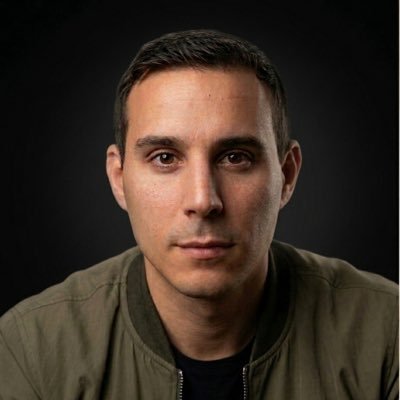
Ariel Hernandez
@@RealSimpleAriel
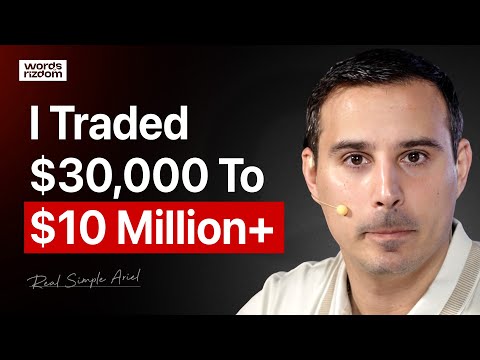
Self-taught swing trader who turned $30,000 into over $10 million in five years after beginning his trading journey upon release from prison in April 2020. Starting with no market knowledge — he had to learn what VWAP was and how to place a limit order — Hernandez grew his account through aggressive scalping and sympathy plays during the post-COVID bull market, compounding small daily gains into life-changing sums. After the 2022 market environment shift forced a reckoning, he transitioned from day trading to swing trading, developing a top-down framework that tracks institutional money flow from market to industry group to individual stock. His multi-playbook approach integrates setups drawn from Gil Morales (undercut and rally), Mark Minervini (VCP), and Pat Walker (flat base breakout), grounded in O'Neil-style fundamental screening for earnings growth, sales acceleration, and relative strength. Known online as @RealSimpleAriel, he shares trade analysis, live market commentary, and educational content across X and YouTube, with a philosophy centered on adaptability, continuous learning, and the conviction that swing trading is accessible to anyone willing to do the evening homework.
The Long Game
▶ 3m 30sAriel answers the opening question — what is the one thing people should focus on to replicate his results. Trading is not get-rich-quick: think of it as a 30-to-40-year career where, if you compound properly, the last five years make more money than the first thirty. Never stop studying people with more longevity — Peter Brandt, Jason Shapiro, Linda Raschke, Lance Breitstein — and understand what gives them their edge. Adaptability matters because the environment is always changing. The 2020–21 bull market was atypical; what worked then taught bad habits that had to be broken in 2022.
"I always tell people if you have the long game on trading — if you think about trading as like a 30 or 40 year career... the most amount of money you’re ever going to make is the last five-year bracket of your career because if you do compounding properly, the last five years will make way more money than almost the first 30 or 35 years of your career."
From Prison to Full-Time Trader
▶ 6m 2sAriel came home from his prison sentence on April 1, 2020, and started trading full-time on June 1 with a $30,000 account. He learned the absolute basics from scratch — what VWAP was, how to place market and limit orders, how to use a gap scanner. He tread water for months (June through September), then found successful day traders on Discord. While the top traders were making $20,000–30,000 a day, their friends were making a more relatable $800–900 a day, so he latched onto what they were doing. The breakthrough came from sympathy plays — buying related stocks when a leader made a massive move — combined with aggressive scalping of 10–15 trades per day. He compounded from $1,000 to $3,500 daily, turning a $60,000–90,000 account into a growing base. His nothing-to-lose mentality — having just been sleeping in prison — fueled the aggression that turned $30K into $3.5 million in 16 months.
"Mentality wise, I had nothing to lose. Just months earlier, my situation in life was I was sleeping in prison. So I didn’t have anything to lose — this was either going to be a career or I was going to find out quickly that it wasn’t going to be. And within 16 months I found out that you could change your life and flip it upside down pretty quickly."
Dip-Buying Mechanics
▶ 2m 27sAriel describes the simple scalping formula that worked during the 2020–21 uptrend. In a strong trending market, draw horizontal lines at previous resistance areas. When price breaks through and then pulls back to that level, two forces converge: dip buyers stepping in against the level, and trapped short sellers who didn’t cover on the breakout now buying to exit near flat. This psychology turns old resistance into new support. Ariel used level 2 to read bid/ask acceleration, bought 1,000–2,000 shares for a 15-cent bounce ($300 per trade), and lived by the phrase ‘buy red, see green’ — buy the red candle, sell as soon as it turned green. The strategy broke in 2022 when the environment shifted from trending to choppy.
"Psychologically, previous resistance can become support because you have the dip buyers against that level and you have shorts who didn’t cover who are now getting a chance to get out. So there becomes twice the amount of buyers against the level of previous resistance."
Sympathy Plays
▶ 2m 51sSympathy plays capitalize on trader psychology: when a stock makes a massive move, traders who missed it scramble for the next related name. Ariel illustrates with GME leading to AMC, KOSS, NAKD, and EXPR following. Same pattern with Tesla sparking moves in Rivian, Lucid, and Solo. In solar, SPI went from $1 to $46 in a day — Ariel found SUNW on FinViz as another dollar solar name and rode it from $0.90 to $4 the same day. The quantum sector repeated the pattern with IONQ leading and RGTI, QUBT, and QBTS following. The bigger the lead runner goes, the more predictable the sympathy becomes — even 30–100% intraday moves are recurring. This strategy was the primary engine behind Ariel’s $30K to $3.5M run.
"Trader psychology basically goes, "Oh my god, I just missed this. What’s the next one?" And that’s how trader psychology works... Even most recently with the quantum names, you had IONQ and people are like, man, I missed it. So you go Rigetti and you go QMCO and you go QUBT."
Learning Through Immersion
▶ 3m 54sAriel’s early P&L was comically small — $3, $5, −$8, −$10 days — because he wasn’t risking anything, just figuring out the platform. There is no single book that tells a new trader how to do everything: how to add a moving average to a chart, how to find gappers, how to read level 2. You either ask people or figure it out yourself. Once he committed, he had no other job and still hasn’t had one since. He put in 10–12 hours a day — at his desk 90 minutes before the open, an hour or two after the close, sometimes at night — buying courses, joining chat rooms, studying successful traders on FinTwit. The core discipline was simple: focused on not losing money, buying dips, cutting quickly if wrong, and compounding the frequency of small wins. He got kicked off his broker for exploiting midpoint fills with too many market orders.
"My P&L some days was like three bucks, five bucks, lose eight, lose 10 because I wasn’t trying to risk anything. I was just trying to figure out what the heck was going on in the markets. What is VWAP? How do I even put a moving average on my chart?"
The 2022 Wake-Up Call
▶ 3m 8sWatching Kristjan Kullamägi make $10 million across just 10 swing positions planted the seed — daily chart breakouts, not scalping. Getting kicked off his broker forced change; the new broker didn’t provide midpoint fills, breaking the scalping edge. Ariel didn’t bother learning another way until 2022 when the market environment shifted and the dip-buying strategy that had worked flawlessly started producing losses. The critical realization: the strategy didn’t stop working — the environment stopped being conducive to it. When the market returned to an uptrend, the same strategy would work again. This was the catalyst that pushed him to develop a swing trading approach that could adapt across market regimes.
"It’s really not that what I was doing stopped working. It’s just the environment wasn’t being conducive to that kind of trading anymore. When the market turns up, that kind of trading works again."
Starting with Nothing
▶ 5m 27sAriel sold his truck and watch to fund his account to the $25,000 PDT minimum. He made $90,000 from June to December 2020, with the bulk in the last two and a half months. He moved back home with family — his mom became his biggest supporter once she saw the results: "Wow, son, you made $90,000 this year and you started halfway through." Coming out of prison, there was initial skepticism — family expected him to get a job — but he picked up trading quickly enough that they got off his back. By 2021, he was posting $200,000, $500,000, and $800,000 months. "Son, I don’t know what you’re doing, but keep it going." The key enabler was a support system that didn’t force him into a 9-to-5 before he could prove himself.
"Thank God for an awesome mom who believed in me and then started to see like, "Wow, son, you made $90,000 this year and you started halfway through the year.""
Staying Grounded After Success
▶ 4m 39sBy 2021, Ariel got cocky. He moved out, rented an apartment, bought a new truck, diamond chains, and a watch. Looking back, he calls it the dumbest thing he did — buying too many material possessions with trading profits. Now, despite making significantly more money, he lives more frugally than he did early on. "Market giveth and market taketh away" — losing money in the markets costs far more than any shopping spree. The discipline to stay grounded and protect capital matters more the larger the account grows, because percentage losses scale with the portfolio and lifestyle inflation can become a forced seller in drawdowns.
"I got a little cocky... I ended up moving out of my parents’ house, got an apartment that cost 3,500 bucks a month... It was the dumbest thing that I had done was buy too many material possessions."
Don’t Style Drift
▶ 4m 22sAt the end of 2021, Ariel made a deliberate mental shift to become a swing trader. Reading Bill O’Neil’s How to Make Money in Stocks taught him to focus on leading stocks with good earnings and sales in a trending market. The stocks that hold up best during corrections are the future leaders — using weakness as a screening tool instead of a reason to panic. His core principle: "Don’t style drift just because the market isn’t conducive to your style right now. Every style of trading — position, swing, or day trading — has a time under the sun." Recently, high volatility made it a day trader’s paradise but a swing trader’s grind. Understanding which environment your tactics work in is essential. The stocks acting weakest when the market is strong are the first to get obliterated when the market turns down.
"Don’t style drift just because the market isn’t conducive to your style right now. Every style of trading, whether it’s position or swing or day trading, has a time under the sun."
Finding Mentors
▶ 3m 12sAriel found his first mentor on StockTwits by searching for charts that were actually moving. He joined a Discord where a trader was doing $20,000–40,000 a day — but his best friend was doing smaller, more relatable amounts. He had already heard of Mark Minervini and Stan Weinstein, and knew the Market Wizards series existed, so he understood there was a canon of proven methodologies. Learning through practice became the operating principle: hearing a concept is like reading a recipe — "just because somebody said it doesn’t mean your meal is going to turn out really good. You have to go get into the kitchen, slice the steak, get the seasonings together, and do it yourself until you can make a really good meal." Trial and error in real time is the only path to real competence.
"Just because somebody said it, I now have to go apply it in real time. So applying that in real time became very important. And that’s how you learn — through practice."
Building a Playbook
▶ 4m 37sAriel started swing trading with a basic setup: move up, move sideways, surf the moving averages, breakout. But not every chart is picture-perfect, so as he gained experience he added specific setups to his playbook — undercut and rally from Gil Morales, the VCP from Mark Minervini, the flat base breakout from Pat Walker. Market environment and the stock’s industry group determine which setups work and when. For short selling, his trick is simple: put a minus sign in front of the ticker to flip the chart upside down — if it looks bullish inverted, you short it. The philosophy: "I’m just a trader and that’s just a setup. In real time, I’m just a risk manager." Price is the only thing that pays — not news, not earnings, not CNBC. Master one setup, go to the next, and play both sides of the market.
"I’m just a trader and that’s just a setup. And in real time, I’m just a risk manager. Nothing else matters — not news, not what Trump said, not what CNBC is saying, not what the earnings are saying. None of it matters. Price is the only thing that’s going to pay you."
The Math of Swing Trading
▶ 5m 42sAriel knows what he’s going to lose before he ever enters a trade — if a position is 10% of his portfolio and he’s risking a 2% stop to the low of day, the max loss is 0.2% of the portfolio. As a swing trader, you’re wrong roughly 60% of the time. The most common trades are small green, small red, and flat. There is never a big red trade because the stop is defined before entry — unless an overnight gap creates an anomaly. The home runs like HIMS or Nvidia take care of themselves: trim some into strength, trail the moving average, and let the rest ride. The best stocks in the world hold up best when the market goes down, and the weakest stocks act relatively weak even when the market is strong — this asymmetry is the core filter. Journaling is essential early on to build the data set that validates what works, but becomes less necessary once the patterns are internalized.
"As a swing trader, you’re going to be wrong like 60% of the time. The most common trades you take are small green, small red, flat trades. We never take big red. Why? Because we know exactly where we’re wrong before we even get in."
Anyone Can Be a Swing Trader
▶ 4m 18sDay trading is extremely difficult — you need to come up with a new, bright idea every single day in a market that may not be offering any good setups. Swing trading flips this: your homework is done at night when the market is closed. Ariel’s scanning process starts on FinViz with industry group relative strength over one, three, and six months to identify where institutional money is flowing. Then he filters for stocks above the 200-day and 50-day moving averages, adds fundamental criteria (good earnings and sales quarter-over-quarter), and checks which individual names are holding up best. "Now your universe of stocks just went from everything to the best stocks in the best groups in the market." Limit orders with stops at prior day lows mean a trade can trigger while you’re at a 9-to-5 job. Even your aunt "can slow down in the evening with a glass of wine and say, ‘What are the best groups? Which ones have good earnings and sales?’"
"I don’t think I’m some kind of an anomaly... Swing trading is one of those things where your homework is done at night when the market is closed. I know exactly where I want to be with the four, five or six names on watch for tomorrow, the night before."
The Freedom of Swing Trading
▶ 2m 34sTransitioning from day trading was psychologically difficult — Ariel was used to making good money every single day. The mental hurdle was asking: "Who cares about a seven-figure trade if it’s going to take four months? I can make $50,000 a day and do it in 20 days." But the reality of day trading is down days, changing markets, and heart-rate spikes. Swing trading lowers the tempo: he holds Rocket Lab from under $6 to $30 over five months, Nvidia for multiple months. Moving averages dictate trend strength — as long as the stock is above them, he doesn’t think about it. "I can hang out with my dogs. I can go get my haircut — and I still have positions working for me." The goal is to be in the best companies making the biggest moves: "Who doesn’t want to be in Nvidia from 200 to 1,000?"
"I can hang out with my dogs. I can go get my haircut, right? And I still have positions working for me whether they’re coming up or down. As long as they’re above those moving averages, I don’t think about it. I don’t really care."
Mental Capital & the TOAST Trade
▶ 5m 8sMental capital consumption is much higher in day trading because shorter timeframe moves require oversized positions to move the needle — a 2% move with a 5% position barely registers. In swing trading, time pays you: a 30–40% move on a 10% position meaningfully compounds the portfolio. P&L swings are less violent because you’re not adding money until existing positions show traction. Ariel uses the TOAST trade as a case study in what he could have done better: he bought in September and got stopped out weeks before the interview, giving back a substantial amount of the gains. He could have sold more into strength when it broke the 50-day moving average. The saving grace: "In the back of my mind, if I get stopped out of TOAST and I get stopped out of my longs, I’m getting really paid on my shorts" — hedging turns losers into a portfolio-level trade.
"As a swing trader, you let time be the thing that pays you versus position size. The P&L swings aren’t as violent. You’re not putting more money to work until you’ve seen traction on the other things that you’ve gotten yourself into."
Longs & Shorts as Market Feedback
▶ 5mAriel uses stop-outs as a real-time market diagnostic. When his longs keep getting stopped out but his shorts are consistently working, the market is telling him the environment isn’t favorable for being long. Similarly, if shorts keep getting stopped and reclaiming, it’s time to flip to buying undercut-and-rally setups. Watching a stock get stopped out and then recover to $100–200 months later hurts more than taking the loss — but missing a $200 move because you held through a $150 drawdown is worse. Institutions buy dips on quality companies with growth, which is why the stocks holding up best during corrections are the ones to focus on. The bidirectional feedback system — reading what both longs and shorts are telling you — gives an honest, unemotional read on market conditions without needing to interpret news or macro narratives.
"I need longs to get stopped out to really know we’re not in a good environment — because all of my longs are getting stopped out, but all of my shorts are starting to work. So just on the flip side of that, stop-outs aren’t just losses — they’re information."
Compounding & Never Stop Learning
▶ 3m 46sThe flashy image of trading — get-rich-quick, 2,000% single-day gains, zero-DTE options — is the wrong model. "If you just compound your money properly, the last five years will make you more money than the first 25 years." Ariel still buys Lance Breitstein’s course even though he already trades well, because there is always something to learn from traders with different edges. A simple thing he picked up from Lance changed how he thinks about an aspect of his process. The final message: take care of the mind and body, treat trading as a long career, and never stop being a student of the game.
"If you just compound your money properly, the last five years will make you more money than the first 25 years."